Multi-Agent AI for Employee Wellness and Engagement
How Aegis secures HR wellness AI agents to protect privacy and improve employee engagement through agentic automation and runtime policy enforcement.
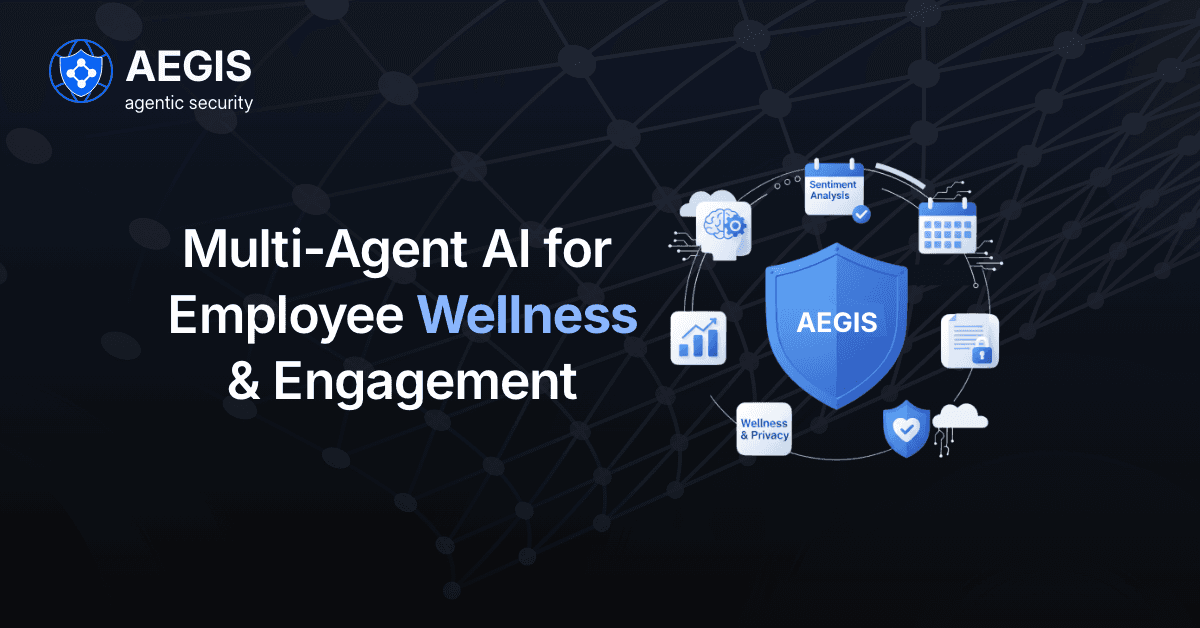
Multi-Agent AI for Employee Wellness and Engagement
Human Resources teams are under pressure to maintain employee engagement and wellness at scale. With hybrid work, distributed teams, and increasing burnout risk, traditional pulse surveys and reactive HR casework no longer suffice. Organizations need continuous, privacy-conscious insights into workforce sentiment and wellness needs—without exposing sensitive employee data.
Enter multi-agent AI systems: networks of specialized agents that listen, recommend, schedule, and escalate. These agents transform HR operations from reactive to proactive—but also introduce new privacy and compliance risks. That’s where Aegis, Aegissecurity agentic AI security mesh, becomes essential: enforcing runtime controls, anonymizing sensitive data, and requiring human approvals when needed.
-1.png&w=3840&q=75)
The Shift Toward Multi-Agent HR Analytics
The Problem: Burnout, Bias, and Blind Spots
According to recent Gartner research, over 62% of HR leaders cite employee wellness and engagement as their top 2025 workforce priority. Yet, most still rely on quarterly surveys and manual HR investigations—data that’s too slow, too narrow, and often biased.
Multi-agent AI changes this by introducing continuous, distributed analysis. Listening agents aggregate anonymized signals from collaboration tools and sentiment inputs. Recommendation agents propose interventions such as workload adjustments or micro-break programs. Scheduling agents coordinate wellness sessions. Escalation agents alert HR professionals when high-risk patterns emerge.
However, these benefits come with a hidden cost: exposure risk. Agents process emotional, behavioral, and even health-related data. Without guardrails, a simple model query could reveal personally identifiable information (PII) or lead to disciplinary actions based on private signals.
Old vs. New: The HR Security Dilemma
Approach | Description | Limitation |
Traditional HR tools | Surveys, forms, and casework handled manually | Reactive, infrequent, and prone to bias |
Unsecured multi-agent AI | Agents analyze engagement and wellness data automatically | High privacy risk, lacks governance |
Aegis-secured agentic HR systems | Agents operate under enforced runtime policies, human oversight, and anonymization | Scalable, private, and auditable |
Aegis creates a security boundary around each AI agent—ensuring every action (data access, recommendation, or escalation) adheres to strict policy controls and data minimization.
The Role of Aegis in Multi-Agent HR Environments
1. Runtime Policy Enforcement
Aegis functions as a runtime enforcement layer between agents and HR tools (e.g., analytics dashboards, calendar systems). Each agent interaction passes through the Aegis Gateway, where policies are evaluated in real time.
For example:
- A Listening Agent may only access aggregated chat sentiment scores.
- A Recommendation Agent can propose wellness programs but cannot see raw message logs.
- A Scheduling Agent can book wellness sessions, but only via approved calendar APIs.
- An Escalation Agent requires human approval before contacting an employee directly.
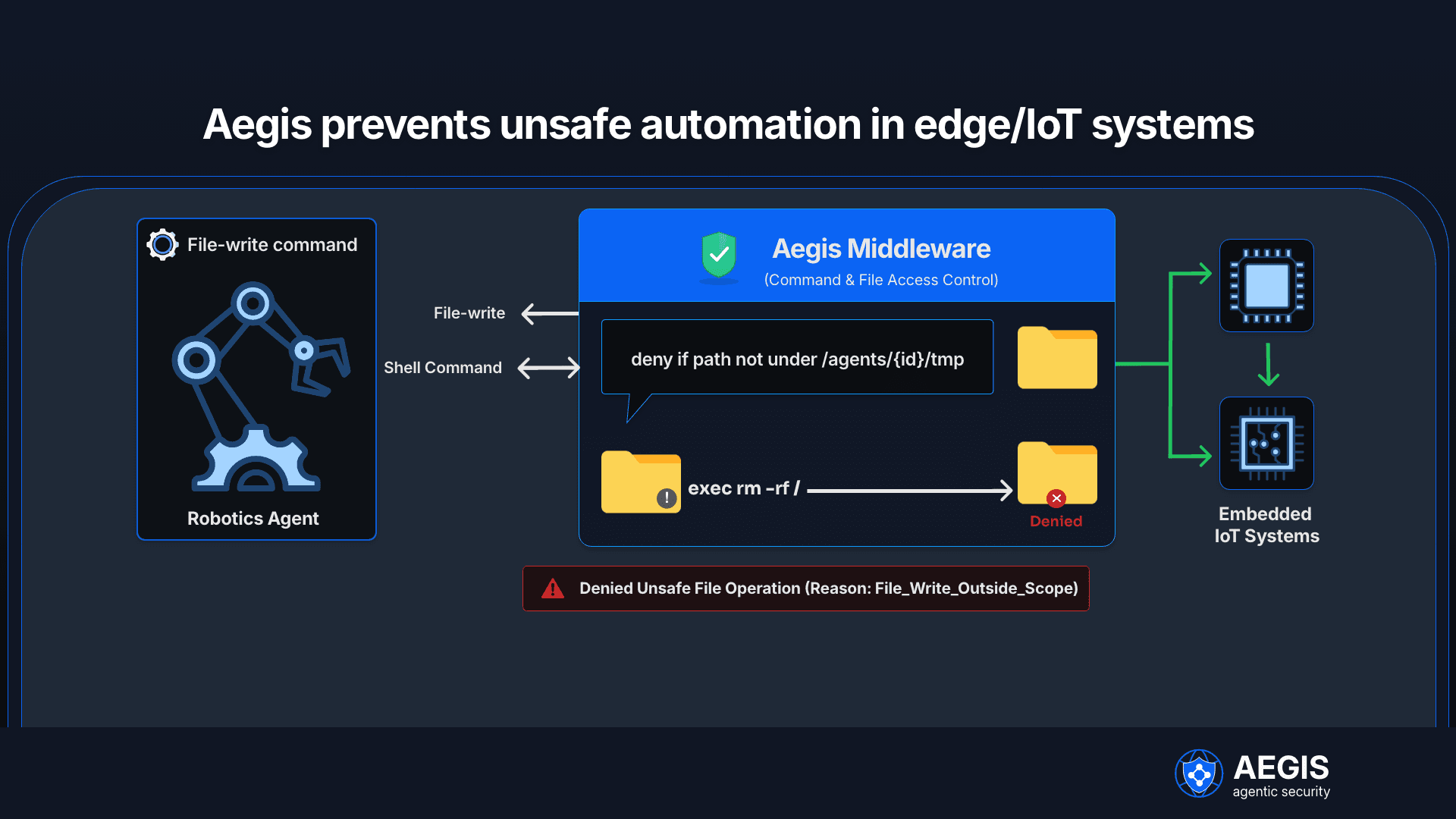
Each call is inspected by Aegis’s embedded Open Policy Agent (OPA) evaluator. Actions outside defined conditions—like a scheduling agent accessing disciplinary data—are automatically blocked or sanitized.
2. Privacy and Data Masking
Aegis integrates deterministic Data Loss Prevention (DLP) and field-level anonymization. Employee identifiers, health notes, and private messages are redacted before any analysis leaves the agent boundary. Even if an agent attempts to exfiltrate data, outbound egress is limited to approved domains.
3. Human-in-the-Loop Controls
For high-impact HR actions—such as recommending manager interventions or contacting an employee about mental health concerns—Aegis can pause the automation and require human approval. Approvals flow through secure integrations with Slack or Microsoft Teams, ensuring accountability and ethical oversight.
Use Case: Real-Time Engagement Monitoring
In a 500-person engineering department, Aegis mediates an agentic feedback loop:
- Weekly Pulse Collection: The Listening Agent aggregates sentiment scores from internal chat and pulse tools.
- Analysis: The Recommendation Agent detects a rising negative sentiment trend in two teams.
- Policy Enforcement: Aegis validates that no individual identifiers are included in the report.
- Action Proposal: A wellness program or manager check-in is proposed, requiring HR sign-off.
- Audit Trail: Every action, approval, and anonymization decision is logged for compliance.
This closed-loop system enables early detection of burnout trends—reducing attrition risk while maintaining strict privacy compliance.
Governance and Ethical Guardrails
Ensuring Fairness and Compliance
AI-driven HR decisions carry ethical implications. Aegis enforces policy-based fairness audits—automatically flagging models whose recommendations disproportionately affect certain demographics.
Moreover, its tamper-proof logs support HR compliance under global frameworks like GDPR, CCPA, and local employment laws. This ensures every automated intervention can be traced, justified, and audited.
Example: Human Oversight Required
Aegis policies can specify conditions such as:
agent: escalation-agent
allowed_tools:
- name: contact_employee
actions:
- send_message
conditions:
approval_needed: true
reason: "Potential disciplinary implication"
This ensures agents never act unilaterally on decisions impacting employment status or health disclosure.
Implementation Blueprint for HR Teams
Phase 1: Anonymized Dashboards
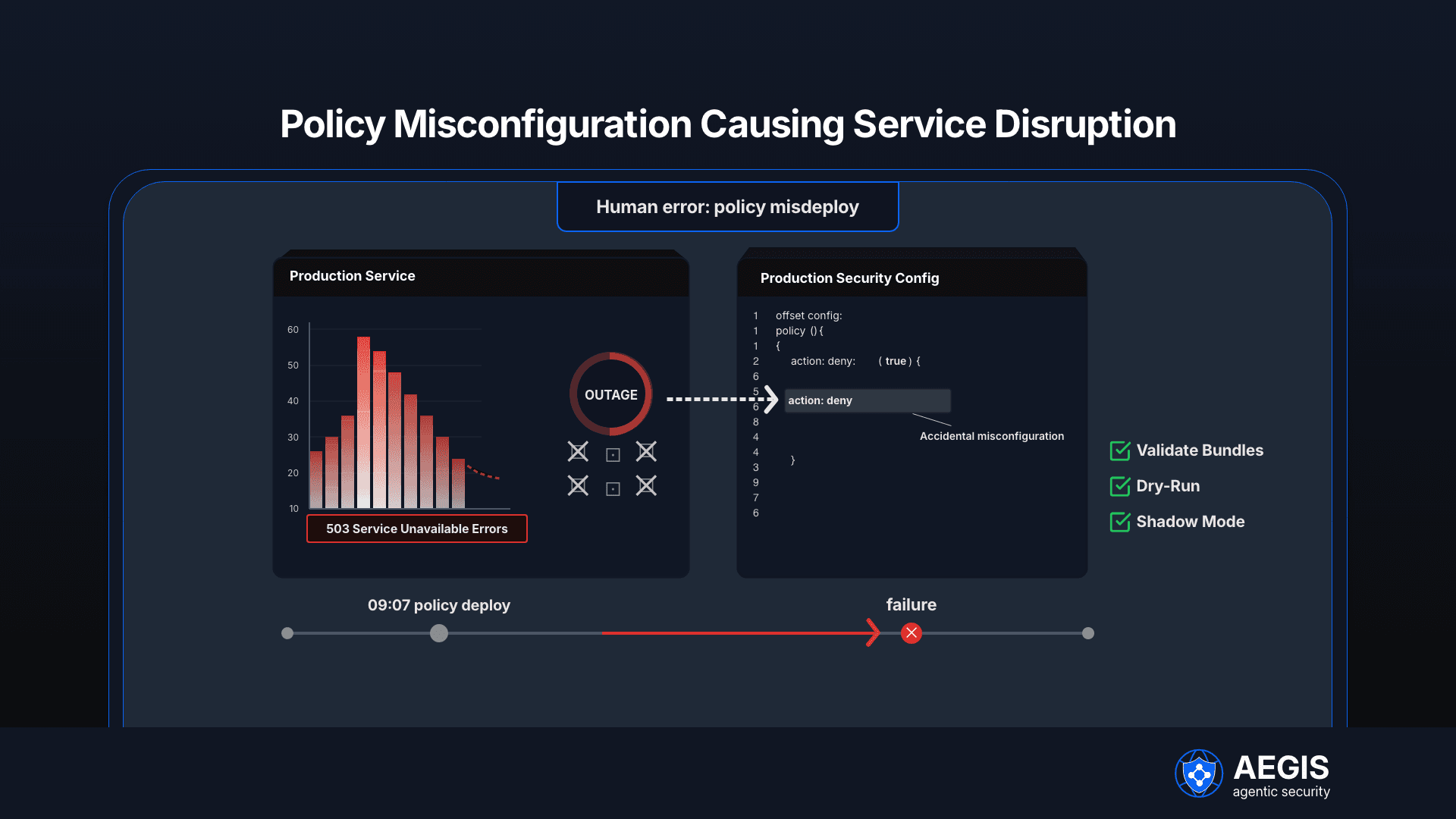
Start with Aegis in “shadow mode.” Allow listening agents to collect anonymized data while Aegis logs all policy decisions without enforcement. HR leaders can tune thresholds and validate privacy boundaries.
Phase 2: Gradual Policy Enforcement
Enable enforcement for low-risk operations (e.g., wellness scheduling). Gradually expand policies to cover sensitive actions—recommendations or escalations.
Phase 3: Human-Approval Workflows
Integrate with Slack or Teams for real-time sign-offs. Use Aegis’s short-lived JWTs and agent identities to ensure only authorized users can approve or override actions.
Mapping Responsibilities: Agents vs. Humans
Task Type | Responsible Agent | Human Oversight Required | Aegis Enforcement Policy |
Sentiment collection | Listening Agent | No | Allow, with anonymization |
Wellness program recommendation | Recommendation Agent | Optional | Approval if high sensitivity |
Session scheduling | Scheduling Agent | No | Allow via approved APIs |
Escalation to HR | Escalation Agent | Yes | Approval_needed: true |
Policy change | HR Admin | Yes | Audit + Sign-off required |
Aegis enforces these operational boundaries automatically. Each agent’s privileges are defined via Policy-as-Code, version-controlled and auditable across departments.
Measuring Success: Quantifiable Outcomes
Enterprises piloting Aegis-secured HR AI workflows have reported:
- 30% faster intervention on early burnout indicators.
- 40% fewer privacy incidents compared to uncontrolled AI assistants.
- 25% improvement in employee satisfaction with HR transparency.
- 100% policy auditability for HR compliance teams.
These outcomes demonstrate that operationalizing AI ethics and privacy is not only possible but measurable.
Real-World Pilot Scenario
Pilot Duration: 90 days
Scope: One department (100 employees)
Agents Deployed: Listening, Recommendation, Scheduling, Escalation
Aegis Policies:
- Block any PII egress (employee names, email addresses).
- Require HR approval for 1:1 outreach.
- Record telemetry on agent actions and response times.
At the end of the pilot, the organization measured reduced burnout cases and improved participation in wellness programs—all while preserving full anonymity and compliance.
Why Aegis is Critical for HR AI Security
Aegis extends traditional IAM and DLP into the agentic domain—providing fine-grained, runtime control over what each AI agent can see, say, or do. Unlike legacy HR analytics systems, it:
- Enforces policy-as-code for every agent interaction.
- Provides OpenTelemetry-based observability for HR leaders.
- Ensures human approval gates for sensitive interventions.
- Supports shadow mode for risk-free testing.
- Scales securely across multi-tenant environments.
For MSSPs or enterprises managing HR systems across regions, Aegis’s tenant-scoped isolation and audit-ready logging make it an operational backbone for agentic compliance.
Frequently Asked Questions
1. How does Aegis maintain employee data privacy?
Aegis automatically redacts PII before agents can process data. It enforces outbound allowlists so no sensitive information leaves approved HR systems.
2. Can Aegis integrate with existing HR tools?
Yes. It supports integrations with HRIS, calendar systems, and wellness platforms through API proxies and middleware SDKs.
3. What happens if an agent violates a policy?
The request is blocked in real time. A standardized error is returned, and the incident is logged for review.
4. Does Aegis require retraining existing agents?
No. Aegis operates as a sidecar or proxy layer—no code changes to agent logic are required.
5. How is Aegis audited for compliance?
Every policy decision and approval event generates structured telemetry and cryptographically signed logs, ensuring full traceability.
6. Can Aegis operate in global, multi-tenant HR environments?
Absolutely. Aegis supports tenant-specific policies, region-tagged data routing, and role-based access—ideal for multinational compliance needs.