Leveraging Agents for Business Analytics & Reporting
Learn how BI analytics agents and Aegis enable secure, automated dashboards and policy-controlled analytics workflows for enterprise reporting.
Leveraging Agents for Business Analytics & Reporting
Business Intelligence (BI) and analytics workflows are becoming more autonomous. The rise of agentic AI—intelligent software agents that plan, query, and visualize data—has transformed how organizations interact with data. However, while agentic systems promise agility, they also introduce security and governance challenges. Without control, autonomous agents can expose sensitive information or propagate errors across dashboards.
Enter Aegis Gateway by Aegissecurity—a policy and observability fabric for secure multi-agent AI systems. Aegis acts as a runtime guardrail that enforces governance, enforces least-privilege boundaries, and ensures that analytics automation operates safely at enterprise scale.
The New Era of Automated BI: From Manual Dashboards to Autonomous Agents
The Problem with Traditional BI Workflows
For years, analysts have struggled with repetitive data preparation and manual reporting. ETL pipelines must be hand-tuned, dashboards updated manually, and ad-hoc SQL queries shared via email. This approach doesn’t scale when data changes by the hour. The result: stale insights and high operational overhead.
The Rise of BI Automation Agents
Modern BI stacks now employ agentic AI systems—specialized agents that handle ingestion, modeling, visualization, and summarization:
Task | Agent Role | Automation Outcome |
Data ingestion | ETL Agent | Cleans and structures incoming data |
Model selection | Modeling Agent | Chooses statistical or ML model for KPIs |
Visualization | Dashboard Composer | Builds live dashboards and charts |
Narrative summary | Summarizer Agent | Generates executive-ready reports |
Alerting | Monitoring Agent | Detects anomalies and triggers follow-up actions |
Instead of relying on scheduled reports, these agents collaborate to build real-time dashboards and generate executive digests autonomously.
Automation Meets Governance: The Role of Aegis Gateway
Why BI Agents Need Guardrails
While analytics agents speed up reporting, they also create risk. A summarizer agent could inadvertently include personally identifiable information (PII) in an external report. A modeling agent might leak customer data to a third-party visualization tool. Traditional access control systems (IAM, RBAC) don’t inspect the content of these interactions—they only check “who” is making the request, not “what” is being shared or “why.”
Aegis Gateway as the Policy Mesh for BI Automation
Aegis solves this by acting as a runtime security mesh between agents and their tools. Every API call—whether to a data warehouse, dashboarding engine, or report writer—passes through Aegis’s enforcement layer. It evaluates policy-as-code definitions that describe exactly what each agent can do.
Example:
Aegis policy for a “dashboard-composer” agent might specify:
agent: dashboard-composer
allowed_tools:
- name: tableau-api
actions:
- publish_dashboard
conditions:
approval_needed: true
sanitize_fields: ["email", "ssn"]
When the agent attempts to publish, Aegis checks whether PII fields are included. If detected, the call is sanitized or requires human approval via Slack or Teams.
How Aegis Protects Agentic BI Pipelines
Step-by-Step Flow
Below is an example of how Aegis integrates with an automated analytics pipeline:
- ETL Agent ingests data from source systems. Aegis validates the source, schema, and parameters.
- Modeling Agent selects a statistical model. Aegis verifies tool permissions and model provenance.
- Dashboard Composer creates live visuals. Aegis sanitizes fields and enforces approval if sensitive data is visualized.
- Narrative Summarizer generates text. Aegis ensures PII redaction and records lineage metadata.
This approach enforces both data privacy and explainability—each visualization or report includes a traceable lineage of datasets, models, and policies used.
Metrics for Success
To quantify BI automation maturity and control:
Metric | Description | Target |
Time-to-dashboard | Time to generate live dashboards | < 15 min |
Dashboard freshness | Update latency from data source | < 5 min |
Manual query reduction | % of analyst queries replaced by automation | ≥ 60% |
Policy enforcement latency | Delay added per call by Aegis | ≤ 20 ms |
Audit coverage | % of dashboards with signed provenance metadata | 100% |
These metrics demonstrate that automation and compliance can coexist with minimal operational friction.
Key Use Cases for Secure BI Automation
1. Automated Daily Operations Digest
Each morning, a set of agents generate a KPI dashboard and one-paragraph executive summary.
Aegis ensures:
- Only aggregated, non-PII data leaves internal systems.
- Executive distribution requires human approval.
- Snapshots are signed and versioned for regulatory traceability.
2. Anomaly Detection and Root Cause Investigation
A monitoring agent detects an abnormal sales drop.
It triggers an investigation agent, which queries source systems and drafts hypotheses.
Aegis enforces query scope boundaries and records the lineage, ensuring investigative queries cannot access sensitive customer-level data.
3. Cross-Tenant Analytics in Multi-Tenant Systems
In managed service provider (MSP/MSSP) contexts, agents analyze metrics across tenants.
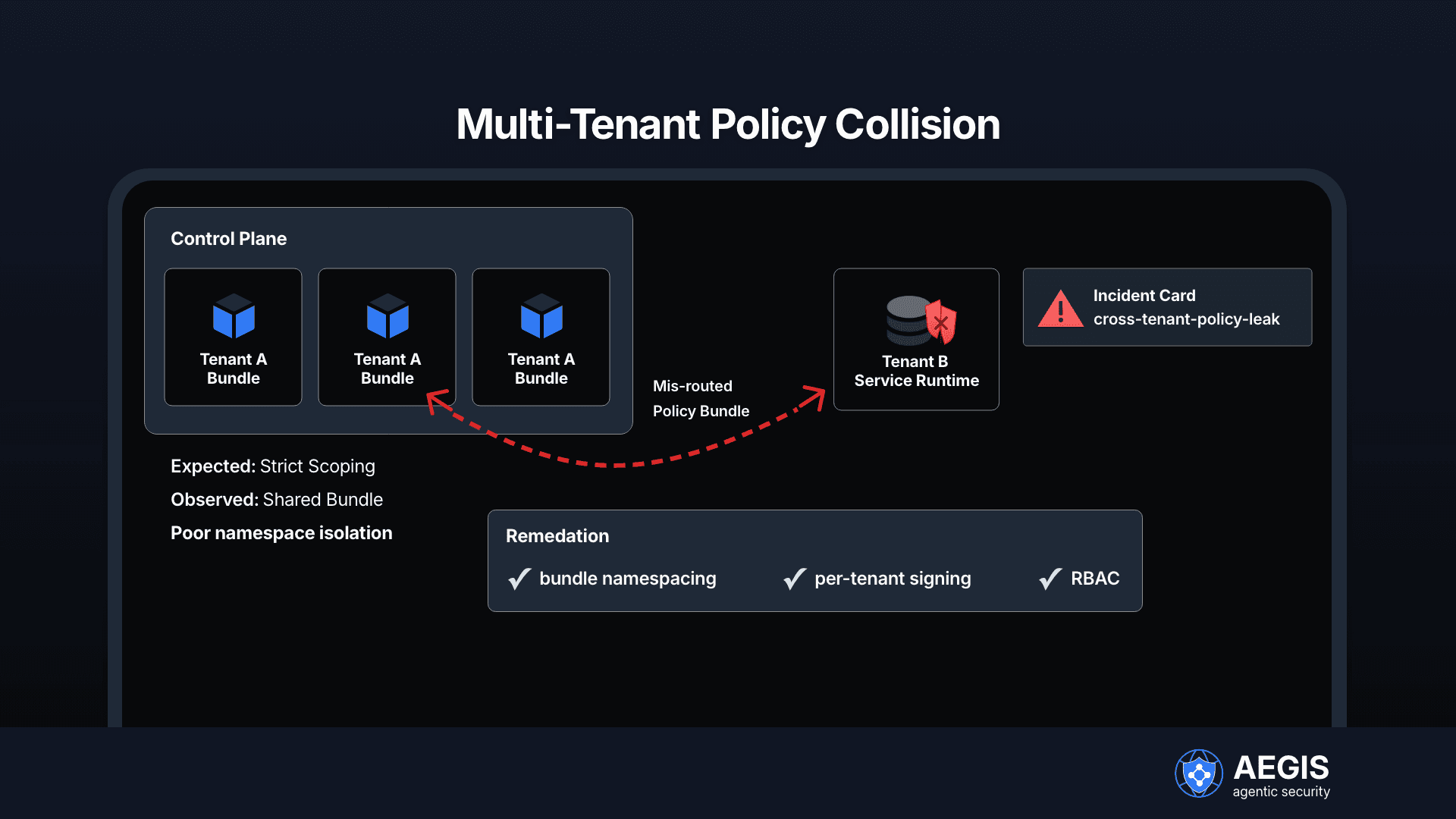
Aegis enforces tenant-scoped policies to prevent cross-customer data exposure and region-tagged routing for data residency compliance.
4. Human-in-the-Loop Governance
Certain high-impact operations (e.g., publishing dashboards to public stakeholders) may require approvals. Aegis routes these to security or compliance reviewers in Slack or Teams, ensuring oversight without blocking normal operations.
Integrating Aegis into BI Stacks
Deployment Model
Aegis deploys as a sidecar or forward proxy alongside orchestrators such as LangGraph, AgentKit, or CrewAI.
The data plane enforces real-time policy decisions, while the control plane manages agent registration, policy compilation, and telemetry aggregation.
Observability & Reporting
Aegis emits OpenTelemetry traces and metrics for every decision, tagged with:
- agent_id, tool, decision, policy_version, and latency.
- Audit logs for every dashboard export or summarization event.
These logs feed into enterprise SIEM systems, enabling compliance audits and anomaly detection.
Example: Automated Financial Reporting
In a FinTech setting, the finance-agent aggregates daily revenue KPIs and publishes dashboards.
Aegis policies ensure:
- Payments API calls over $5 000 require approval.
- Data egress is restricted to internal domains.
- Logs are cryptographically signed for SOX compliance.
Aegis in Action: Mapping Automation Tasks to Agent Guardrails
Automation Task | Responsible Agent | Aegis Enforcement Example | Governance Outcome |
Ingest data | ETL Agent | Allow only whitelisted data sources | Verified lineage |
Build model | Modeling Agent | Restrict model types, record confidence | Explainable AI |
Compose dashboard | Visualization Agent | Sanitize sensitive columns | Compliant visual |
Generate summary | Narrative Agent | Redact PII, approval for exports | Secure distribution |
Detect anomaly | Monitoring Agent | Trigger investigation agent within scope | Controlled escalation |
Each layer of automation includes a policy checkpoint, ensuring autonomy operates within approved boundaries.
Scaling Secure Automation: From Pilot to Enterprise Rollout
Organizations should start small—automating one recurring report—and measure hours saved, manual queries reduced, and policy violations prevented.
After validation, Aegis policies can scale to quarterly financial or cross-departmental reporting.
Operational best practices:
- Maintain RBAC for datasets and versioned dashboard artifacts.
- Store signed exports for audit-ready compliance.
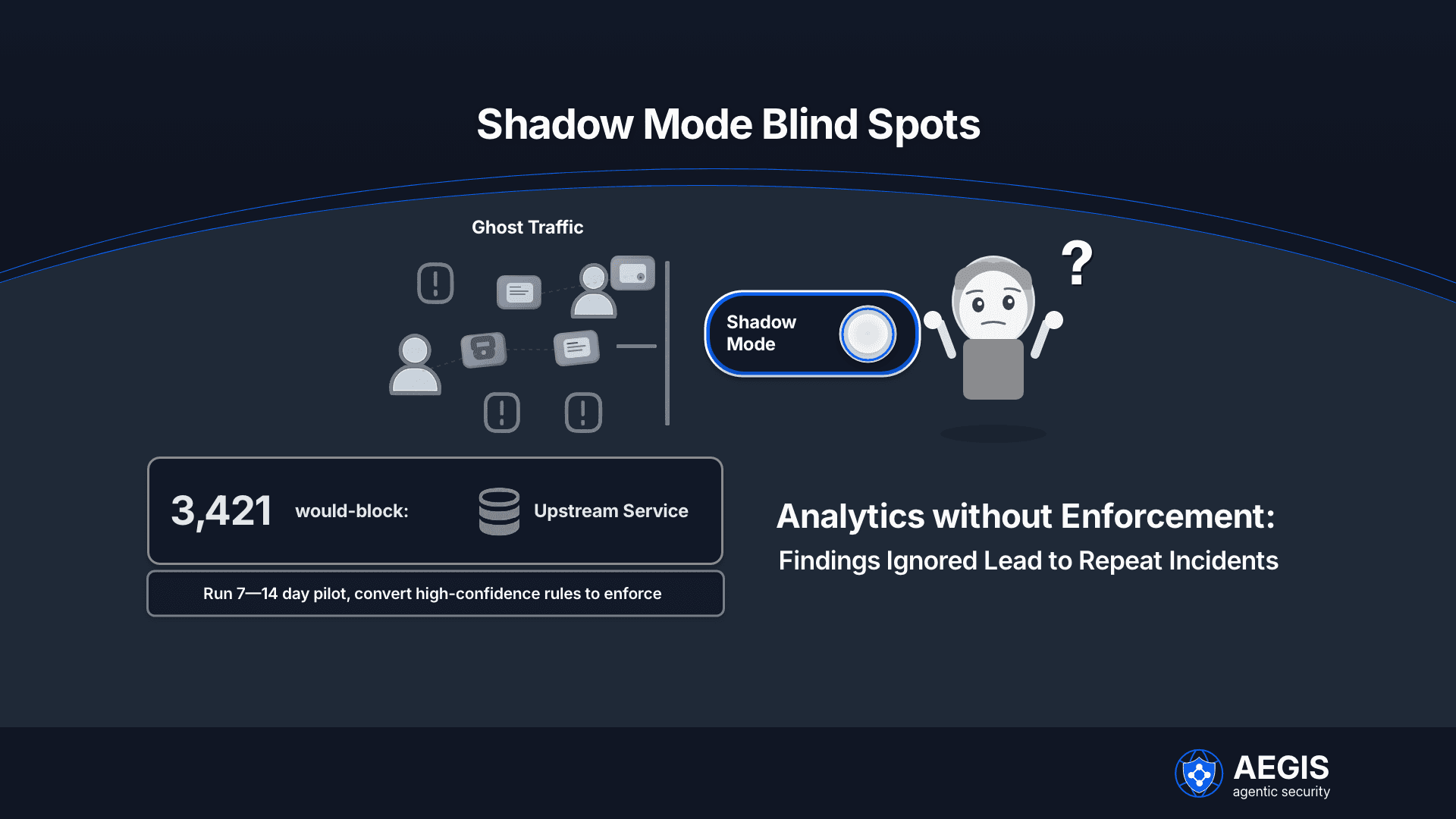
- Use shadow mode to test policies without enforcement.
- Apply agent quotas to prevent runaway aggregation jobs.
For large enterprises with multiple BI teams or data domains, Aegis’s multi-tenant governance ensures each department’s automation operates independently but within corporate compliance frameworks.
Why Aegis is Essential for the Future of BI Automation
Aegis addresses three fundamental enterprise concerns:
- Security & Data Privacy: Every dashboard and report adheres to PII masking and export controls.
- Operational Efficiency: Automation continues without manual oversight, while policy enforcement remains lightweight.
- Auditability & Trust: Each dashboard carries metadata linking datasets, models, and agents to their originating policies.
Frequently Asked Questions
1. How does Aegis integrate with existing BI tools?
Aegis can proxy or wrap API calls made by agents to tools like Tableau, Power BI, or custom dashboards, enforcing runtime policies without altering existing workflows.
2. Does Aegis add noticeable latency to dashboards?
No. Policy evaluations use prepared queries and in-memory caches, maintaining under 20 ms latency at P99.
3. Can Aegis prevent data leaks between tenants?
Yes. Multi-tenant scoping ensures that policies, tokens, and telemetry are tenant-isolated with cryptographic separation.
4. What happens if a policy is misconfigured?
Aegis supports dry-run (shadow) mode where policies observe but don’t enforce, allowing teams to test safely before activation.
5. How are audit trails generated?
Each decision and export event is logged with a signed hash chain, ensuring tamper-proof lineage for regulatory review.
6. Can Aegis handle human approvals?
Yes. It integrates with Slack and Microsoft Teams to handle approval_needed actions interactively, minting one-time override tokens.
Closing Thoughts
As enterprises embrace agentic analytics, automation must be accompanied by control. Aegis Gateway provides that balance—empowering BI automation agents while maintaining the governance, compliance, and trust enterprises demand. With Aegis, your dashboards stay fresh, accurate, and secure—from raw events to executive summaries.