
How Agentic AI Drives Sustainability and ESG Goals
Practical guide: make agentic AI carbon-aware with policies, routing, budgets and auditability using Aegis.
Agentic AI and Sustainability: How to make fast agents also climate-smart
Agentic AI promises automation at scale: autonomous planners, scheduler agents and task-specific workers that reduce manual labor and speed decision loops. But that same automation — when unconstrained — can amplify compute, energy and emissions. This post explains the paradox, shows how to make agents carbon-aware with practical policies, measurements and architecture, and presents Aegis — a runtime policy & observability fabric designed to enforce budgets, routing and auditability for multi-agent systems. Practical examples, a checklist and implementation guidance are included for security, DevOps and sustainability teams.
The paradox of agentic AI and sustainability
Agentic systems can both reduce and increase emissions.
• On the upside, agents can automate supply-chain optimizations, batch I/O to low-carbon periods, and trigger predictive maintenance that prevents waste.
• On the downside, unbounded agents spawn many calls to expensive models and APIs, run redundant CI jobs, or schedule work in energy-heavy regions — producing more compute and indirect emissions.
Recent analysis and reports show data-centre and AI energy demand rising sharply; the IEA projects material growth in electricity demand from AI workloads through the decade, and independent studies highlight the rising footprint of large models. (IEA)
This creates a simple operational requirement: make agentic AI measurable, constrained and auditable.
How to make agents carbon-aware
Designing carbon-aware agents relies on three control planes: Policies, Routing, and Budgets. These work together so agents can act autonomously while staying within measurable sustainability bounds.
Policies, routing, budgets
Policies — policy-as-code for agents — express what an agent is allowed to do, and when. Policies should include parameter constraints (e.g., max model size or max payment amount), intent conditions (only run maintenance when renewables > X%), and approval gates for expensive operations.
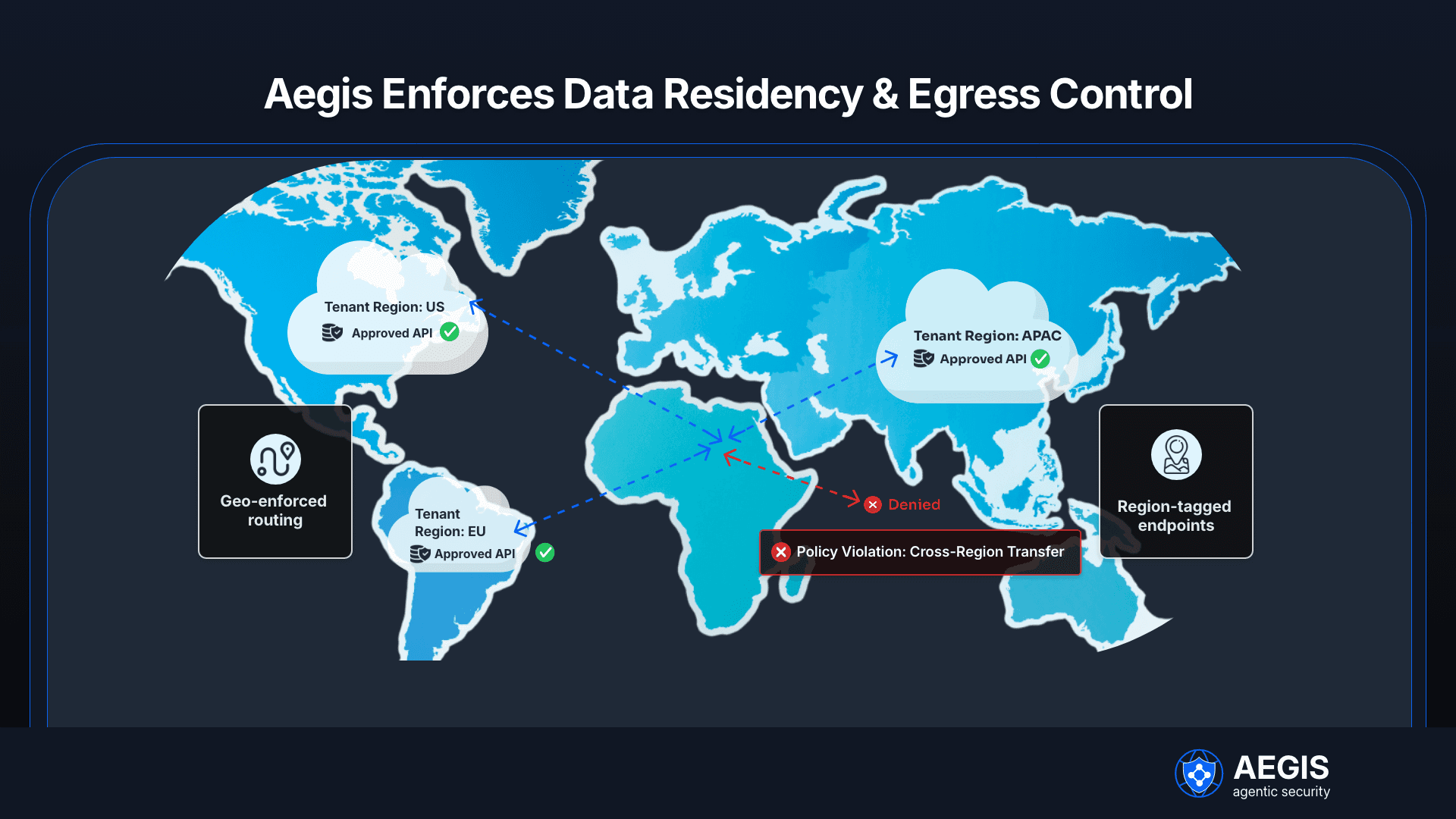
Routing — region and time routing routes compute to lower-carbon regions (or preferred cloud zones) and defers non-urgent work to periods of high renewable penetration. Examples: run data-intensive batch jobs in Region A where the grid is >70% renewables, or run large training jobs overnight when renewable share is forecast high.
Budgets — per-agent budgets (cost and carbon) stop runaway consumption. Budgets can be monetary (USD/day) or carbon (kgCO₂e/day) and should integrate with FinOps and sustainability stacks.
Operational primitives to support the above:
• Per-agent identity + short-lived tokens for attribution and throttling.
• OpenTelemetry spans for every agent→tool call to compute energy per action.
• Approval workflows for high-risk/high-cost actions.
These primitives are core to runtime enforcement fabrics such as Aegis.
Use cases and measurement
Below are concrete use cases that show measurable impact and how to instrument them.
Representative use cases
- Manufacturing — schedule predictive maintenance overnight in regions with high renewable supply to reduce grid carbon intensity.
- DevOps — consolidate CI jobs and reuse warmed caches; a DevOps agent groups non-dependent runs to reduce redundant compute.
- Retail — batch promotions and deliveries to reduce transportation emissions and the compute for route replanning.
- Financial services — consolidate settlement windows to reduce compute peaks during market close.
Measurement guidance:
• Baseline: collect hourly compute usage and energy for current workflows (kWh).
• Attribution: add agent_id and action tags to telemetry so each action maps to kWh and kgCO₂e.
• KPI examples: carbon saved per month, % of agent actions routed to low-carbon regions, cost saved vs baseline.
Table 1 — KPIs to track for carbon-aware agents
KPI | Metric | Target Example |
Carbon saved / month | kgCO₂e | 500–5,000 kg CO₂e (pilot) |
% actions routed to low-carbon regions | % | > 60% for non-urgent jobs |
Cost reduction vs baseline | USD/mo | 5–15% in first 3 months |
Agent budget exhaustion events | count | Zero critical outages; alerts when near limit |
(Implement telemetry that maps OpenTelemetry spans to carbon calculators and FinOps dashboards; see integration checklist below.)
Measurement methods & tools
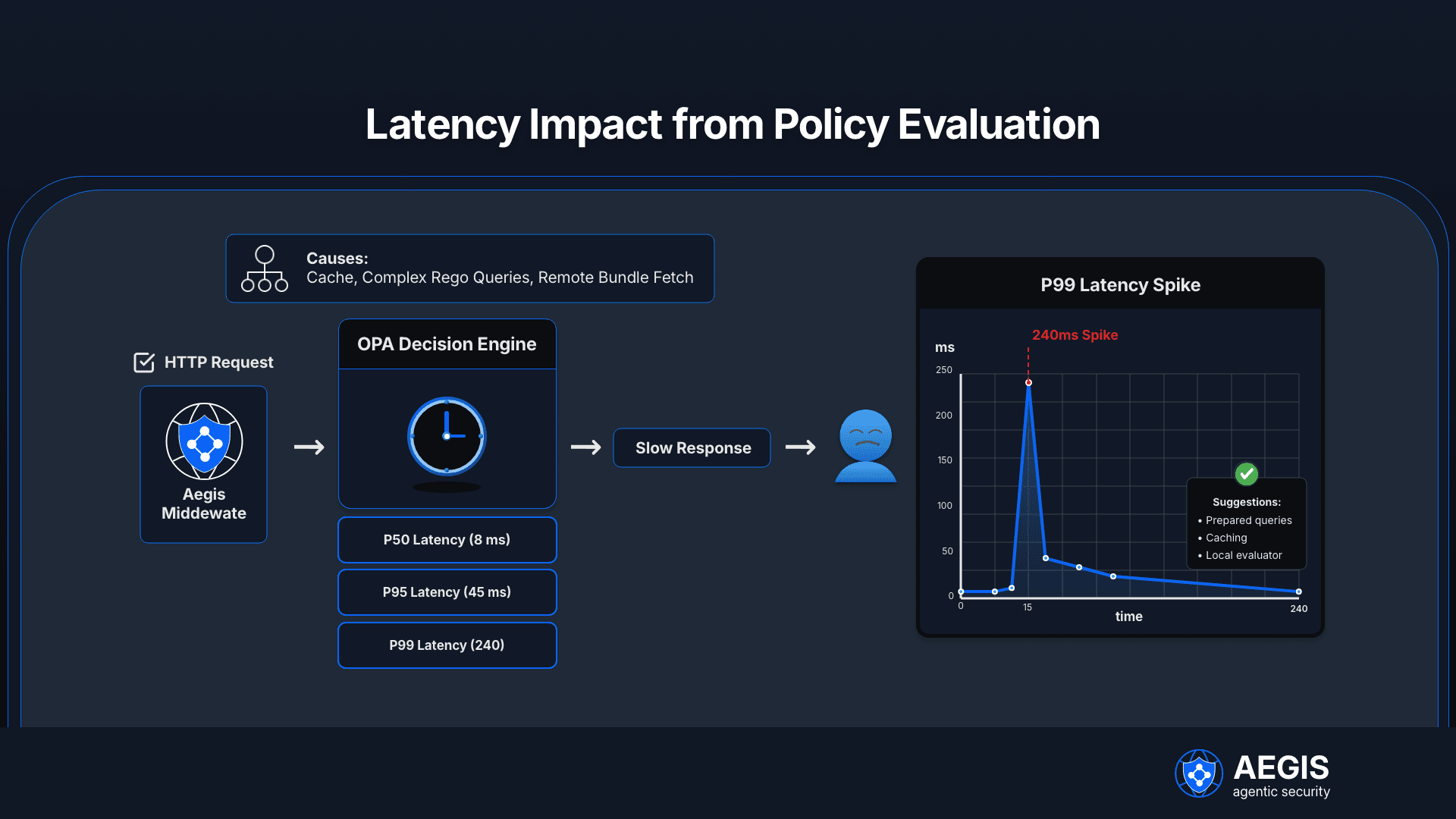
Map OpenTelemetry spans to an energy model (kWh per CPU/GPU-hour) and apply location-specific grid emissions factors. Aggregation pipelines should produce per-agent carbon and cost time series suitable for ESG reporting and internal dashboards. Practical carbon-accounting vendors and the growing carbon accounting market can ingest these streams for formal reporting. See market surveys and carbon-accounting guides for integration patterns. (Grand View Research)
Implementing carbon awareness with Aegis
At least one-third of operational guidance for teams should show how Aegis (the runtime gateway) supports these capabilities. Aegis is designed as a runtime policy and observability fabric that sits between orchestrators and tools, enforcing policies, budgets and routing in real time while emitting OTel spans for auditing. Key capabilities relevant to sustainability:
• Per-agent identity & policy enforcement — register agents with unique IDs and attach policy rules that include carbon routing and model-use limits. Policies can express “route agent X to region A if renewable_share > 60%.”
• Per-agent budgets & throttles — define daily or monthly budgets (cost or carbon). When an agent exhausts a budget, Aegis returns a PolicyViolation and logs the event for FinOps and sustainability review.
• Telemetry for ESG reporting — Aegis emits OpenTelemetry spans for every decision (agent_id, tool, decision_reason, estimated cost/kWh). Those spans directly feed carbon calculators and disclosure pipelines. The product brief explicitly mentions integrating OTel spans that are useful for ESG reports.
• Approval workflows & shadow mode — use shadow mode to gather “would-block” events before enforcing, and route approval_needed events to Slack/Teams for exceptions. This helps avoid operational disruption while tuning carbon policies.
Table 2 — How Aegis maps functional requirement → sustainability control
Requirement | Aegis capability | Outcome |
Route compute to low-carbon region | Policy condition + routing table | Jobs placed in greener regions |
Stop runaway model calls | Per-agent budget enforcement | Prevents unbounded compute |
Attribute energy to agents | OpenTelemetry spans w/ agent_id | Accurate carbon accounting |
Prove decisions to auditors | Signed audit logs + policy versions | Tamper-resistant proofs for ESG claims |
Implementation checklist (practical):
- Instrument baseline compute telemetry and map to kgCO₂e.
- Register agents in Aegis and define initial policies (shadow mode).
- Add region routing and time-based conditions (renewable windows).
- Define per-agent budgets and approval thresholds.
- Flip enforcement on for low-risk policies; monitor would-block events.
- Export OTel spans to carbon accounting and FinOps systems.
Aegis is architected as a sidecar/proxy plus control plane: it compiles policy YAML into OPA bundles, performs runtime evaluation, and emits signed spans for auditability — supporting the exact primitives sustainability teams need.
[IMAGE PLACEHOLDER: Blog cover — designer brief appears in frontmatter above]
[IMAGE PLACEHOLDER: Flowchart illustrating Aegis's 4-step runtime flow: Agent → Aegis Decision Engine (policy/OPA) → Router (region/budget check) → Tool/Cloud. Include icons for policy, telemetry, approval.]
Operational trade-offs, risks and mitigations
Trade-offs:
• Higher model quality often costs more energy. Mitigate with hybrid architectures: distilled models for routine tasks and larger models only when accuracy gain justifies energy cost.
• Agents may create Jevons-type rebound effects: increased efficiency lowers unit cost and increases usage. Per-agent budgets + quotas help control this. (Institute of Energy and the Environment)
Risks and mitigations:
• Runaway compute — enforce budgets, rate limits and per-agent quotas.
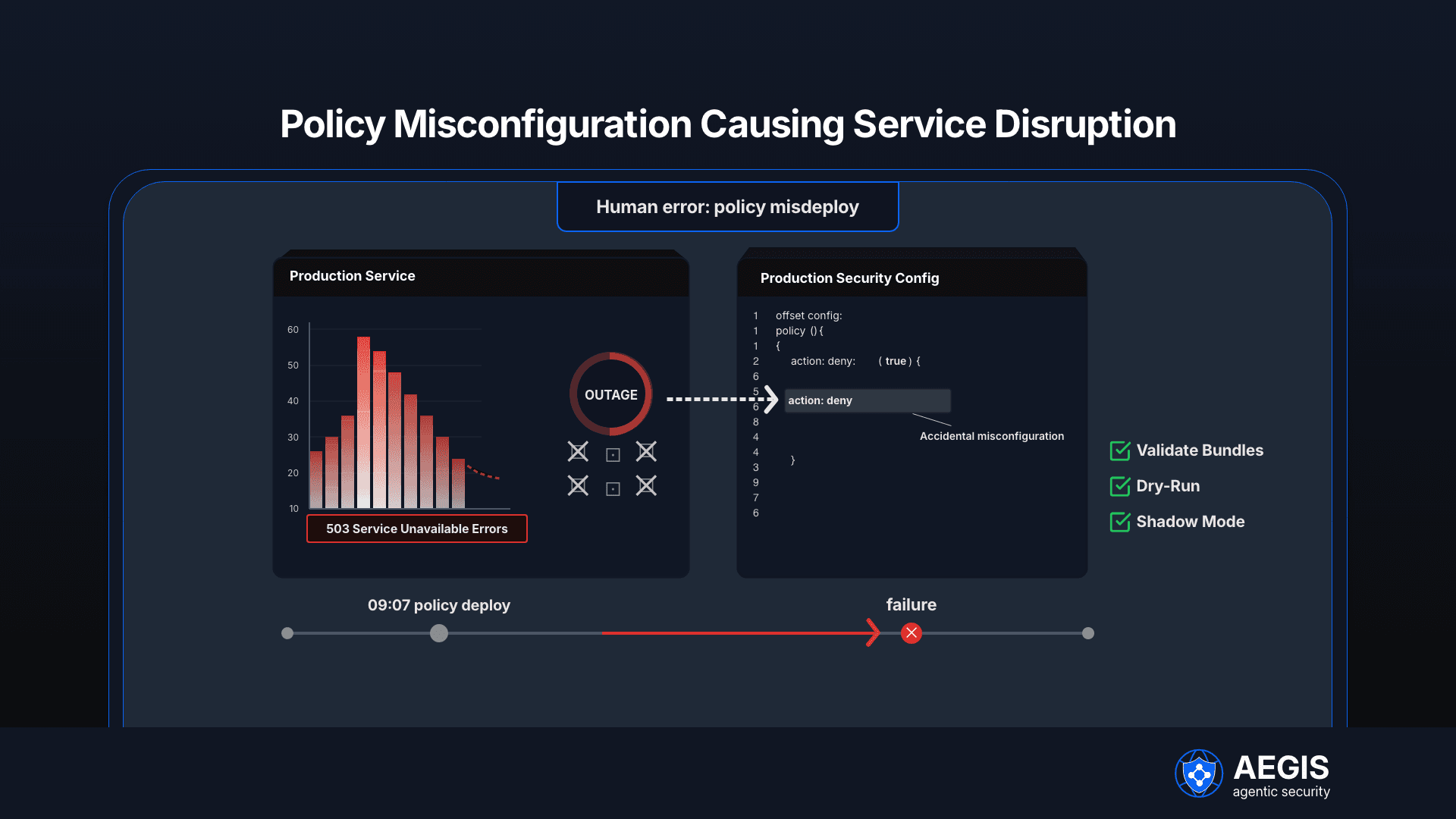
• Policy misconfiguration — use schema validation, dry-run and shadow mode to observe would-block events before enforcing.
• Audit gaps — sign logs and store policy versions; Aegis supports signed audit spans and tamper-proof history for compliance.
Integrations and governance
Aegis integrates with orchestrators (middleware for LangChain/LangGraph or similar), FinOps systems and carbon calculators. The control plane issues short-lived tokens per agent, enabling traceable attribution across systems. The implementation pattern connects FinOps + Sustainability: budgets are mapped to both cost and carbon limits, preventing procurement surprises and enabling sustainability claims in RFPs.
Frequently Asked Questions
Q1 — How do I attribute energy to a single agent action?
A: Emit OpenTelemetry spans with agent_id, duration, CPU/GPU counters and region. Convert compute-hours to kWh using instance power models and multiply by location grid emission factor to get kgCO₂e.
Q2 — Can routing to a “green” region introduce latency or cost trade-offs?
A: Yes. Policies should include cost/latency awareness. Route non-urgent batch jobs to greener regions; keep latency-sensitive tasks in lower-latency zones.
Q3 — What if agents game their own budgets?
A: Enforce at the gateway: tokens include agent_id and claims are validated server-side. Budget exhaustion blocks calls centrally, and policy history shows attempts.
Q4 — How do we validate carbon claims for audits?
A: Keep signed policy and decision logs, export OTel spans to your carbon accounting pipeline and retain policy versions and signed manifests for auditors. Aegis supports signed spans and policy versioning.
Q5 — Where do we start?
A: Start with low-risk policies in shadow mode: register agents, collect would-block metrics for 2–4 weeks, tune rules, then enforce.
Q6 — What KPIs matter most?
A: Carbon saved per month, % actions routed to low-carbon regions, budget variance and cost saved versus baseline.
Closing checklist (quick)
• Baseline compute telemetry → map to carbon.
• Register agents and policies in shadow mode.
• Add per-agent budgets & region routing.
• Export signed OTel spans for ESG reporting.
• Report KPIs monthly and iterate.
Agentic AI can be a force for operational efficiency and sustainability — if teams design for measurement, constraints, and auditability from day one. Runtime policy fabrics like Aegis provide the enforcement, routing and telemetry primitives required to make carbon-aware agents practical, auditable and safe.
External reading & references:
• IEA — Energy & AI (analysis and demand projections). (IEA)
• MIT News — Generative AI environmental impact (context & analysis). (MIT News)
• Carbon accounting market overview. (Grand View Research)