
False Control in AI Systems: Why Policies Fail Without Enforcement
Move beyond policy theater. Learn how to implement deterministic runtime enforcement, intent-based access, and an Agentic SOC to secure enterprise GenAI.
False Control in AI Systems: Why Policies Don’t Work Without Enforcement
Many organizations look secure in governance slide decks while operating completely unprotected in production. A strong AI policy is highly appealing; it signals to regulators, clients, and the public that an organization takes AI governance seriously, giving executives something concrete to point to when asked hard questions about risk management. But here is where appearance and reality violently diverge.
Consider a corporate policy stating that "all models making consequential decisions must be tested for bias prior to deployment." That sentence sounds authoritative and secure. What it isn't, however, is a control. Without an automated, mandatory review gate—with the structural authority to halt deployment—or an in-path tracking system that logs execution states, that policy remains purely aspirational.
Relying on written principles, developer intent, or soft prompt-level safeguards creates an illusion of governance that we term "Policy Theater." AI policy enforcement is the phase enterprises must enter once AI moves beyond isolated experimentation and becomes embedded across live enterprise workflows. It governs how AI behaves in real time, including what data it can access, how information is combined, which actions are allowed, and what outputs can be produced.
Traditional policy enforcement assumes predictable execution paths and stable system boundaries. AI does not behave this way. Its behavior changes non-deterministically based on context, conversation history, retrieved data, and downstream actions involving automated tools or autonomous agents. To keep generative AI aligned with enterprise risk tolerance as usage expands, policy enforcement must operate continuously across prompts, retrieved context, model outputs, and execution paths—and it must do so independently of the model itself.
1. The Critical Drivers for In-Path AI Governance
As organizations connect AI systems to real-world business operations to approve transactions, write code, interact with customers, and move data between platforms, they encounter a growing gap between expected behavior and live operational performance.
1.1. The Shadow Execution Layer
AI adoption inside enterprises is already well ahead of formal governance. Multiple industry surveys show that over 50% of employees use generative AI tools that have not been formally approved or reviewed by security teams, embedding them directly into daily workflows. From a policy perspective, this creates an unmonitored shadow execution layer where sensitive corporate decisions, document transformations, and data syntheses happen entirely outside sanctioned systems, rendering legacy network visibility tools ineffective.
1.2. The Dissolution of Data Boundaries
Data exposure remains the most persistent and underestimated AI risk. According to OWASP’s most recent Large Language Model (LLM) risk analysis, sensitive data exposure ranks as a top security concern for organizations deploying generative AI, surpassing many traditional web application risks. The underlying technical reason is how AI models work: they synthesize, infer, and repackage datasets in complex ways that bypass conventional data boundaries (such as database tables, files, or static API access lists).
1.3. Runtime Compliance Demands
Regulators are increasingly converging on the idea that AI compliance must be demonstrable at runtime, not just documented retroactively during design or procurement procurement phases. Global frameworks like the EU AI Act explicitly mandate runtime governance for high-risk use cases, requiring post-deployment monitoring, logging of AI decisions, continuous human oversight mechanisms, and definitive evidence that safeguards are actively enforced during real-time operation. Similar expectations are emerging in sectoral regulations and national AI guidance worldwide.
1.4. Machine-Speed System Misuse
AI introduces a new class of security failures that do not look like traditional infrastructure breaches until the data has already left the network: prompt manipulation, over-permissive responses, agent misuse, and silent inference attacks. Industrial analysts consistently warn that AI-driven incidents stem from functional misuse and execution overreach rather than classic external intrusion, especially as autonomous agents and tool-connected models proliferate.
2. Five Architectural Dimensions of AI Policy Enforcement
Securing a non-deterministic environment requires a layered suite of control planes that inspect and modify interactions as they execute. True enforcement relies on five distinct operational patterns:
2.1. Real-Time AI Activity Controls
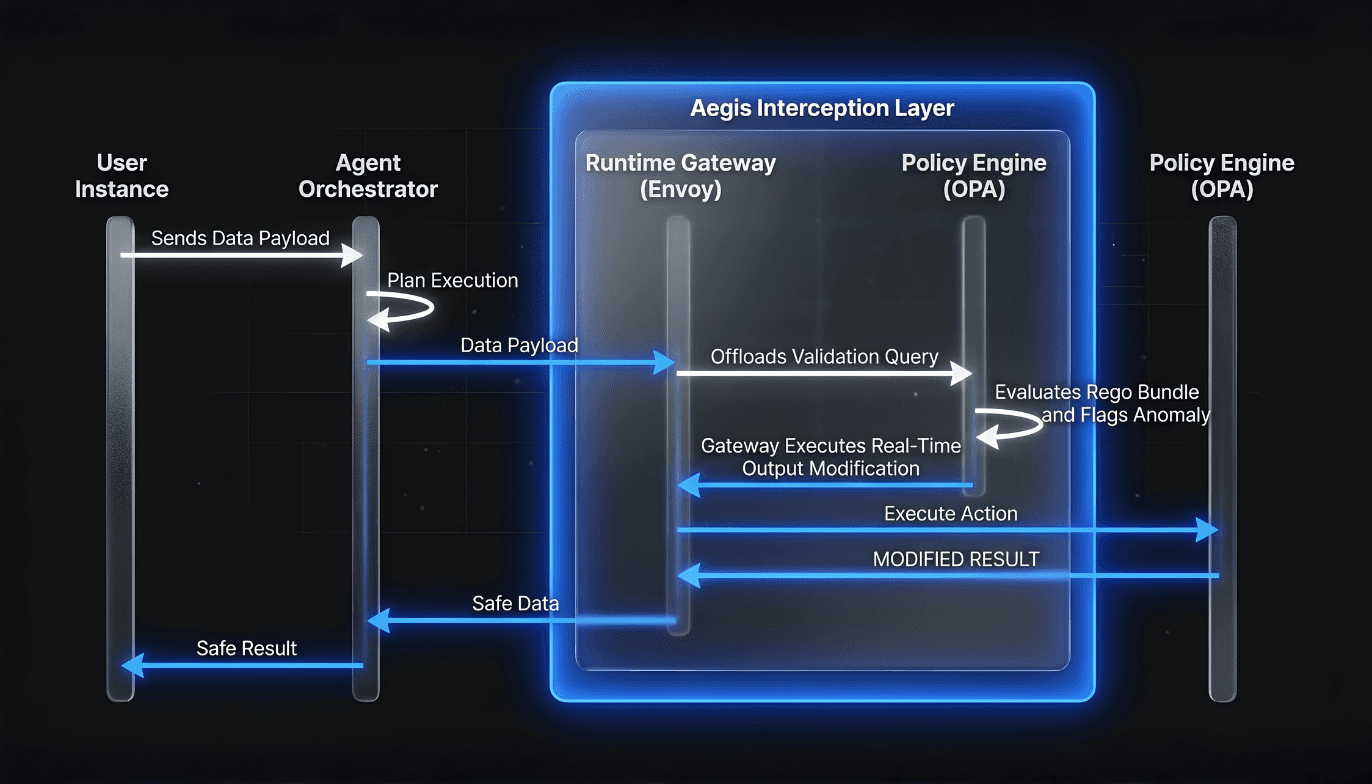
Real-time AI activity controls operate directly in the execution path of generative AI interactions, intercepting prompts, retrieved context, model outputs, and tool calls as they happen. Technically, this requires streaming packet inspection, lightweight classification layers, and deterministic enforcement actions that do not rely on the underlying model to self-regulate.
2.2. Context-Based Policy Enforcement
Context-based enforcement evaluates policy decisions using environmental and interactional signals, not just static rules. This includes user role, data sensitivity classifications, query intent, conversation history, retrieved sources, and downstream usage risk. Unlike Role-Based Access Control (RBAC), which asks who is accessing a system, context-based policies implement Context-Based Access Control (CBAC) to determine under what specific circumstances a response payload is safe to deliver.
2.3. Role-Based AI Usage Rules
Role-based AI usage rules extend traditional RBAC into capability-level restrictions for AI models. Instead of governing access to underlying storage layers or raw system indices, these rules govern what kinds of cognitive actions a specific role is permitted to execute—such as limiting an profile to code optimization or data translation while blocking natural language explanations of proprietary algorithms.
2.4. Model and Tool-Level Restrictions
Model and tool-level restrictions govern which models, plugins, APIs, or autonomous sub-agents can be invoked for specific tasks or data types. This is critical in enterprise environments where multiple public, private, and fine-tuned models coexist. Enforcement operates strictly at the orchestration layer to ensure sensitive, regulated workloads are dynamically routed only to tenant-isolated private models.
2.5. Data-Sensitive AI Controls
Data-sensitive controls enforce policy based on what data is actively involved in the interaction. These controls rely on data classification, sensitivity tagging, and real-time content inspection to prevent leakage, inference, or inappropriate synthesis. Crucially, enforcement applies both to inputs and outputs, since AI can reconstruct or infer sensitive data even when it is not explicitly requested.
3. Why Traditional Controls Fail Against Enterprise AI Chaos
Traditional perimeter security controls assume a predictable execution path and stable system boundaries. When applied to generative AI models, legacy infrastructure engines break completely.
Common Security Enforcement Challenges
Challenge Type | The Failure of Legacy Controls | Effective AI Policy Enforcement |
Non-Deterministic Behavior | Legacy policy engines assume predictable execution paths and repeatable software outcomes. | Policies must evaluate the risk characteristics of outputs (semantic meaning, sensitivity, intent), not just execution codes. |
Prompt & Context Injection | Input validation and WAF-style filtering focus on syntax, but completely miss semantic context. | Continuous, out-of-band inspection of prompt chains, retrieved RAG context, and tool-injected content before generation. |
Blended Data Domains | DLP and data access controls assume clear data boundaries (file, table, API). | Context-aware output governance that evaluates combinations of data synthesis, not just individual sources. |
Agent & Tool Autonomy | IAM frameworks assume a clear human subject performing a bounded action. | Enforcement must track delegated machine identity, tool invocation chains, and effective permissions at runtime. |
Cross-Jurisdiction Overlap | Compliance programs map controls to a single, static regulatory framework at a time. | Enforcement must encode regulatory constraints directly into runtime policy decisions, not post-hoc reporting. |
4. The Aegis Real-Time Interception Architecture
To mitigate these structural failure modes, enterprise platform teams must implement a Runtime AI Gateway pattern. This framework decouples the decision-making runtime (the model) from the enforcement layer (the infrastructure).
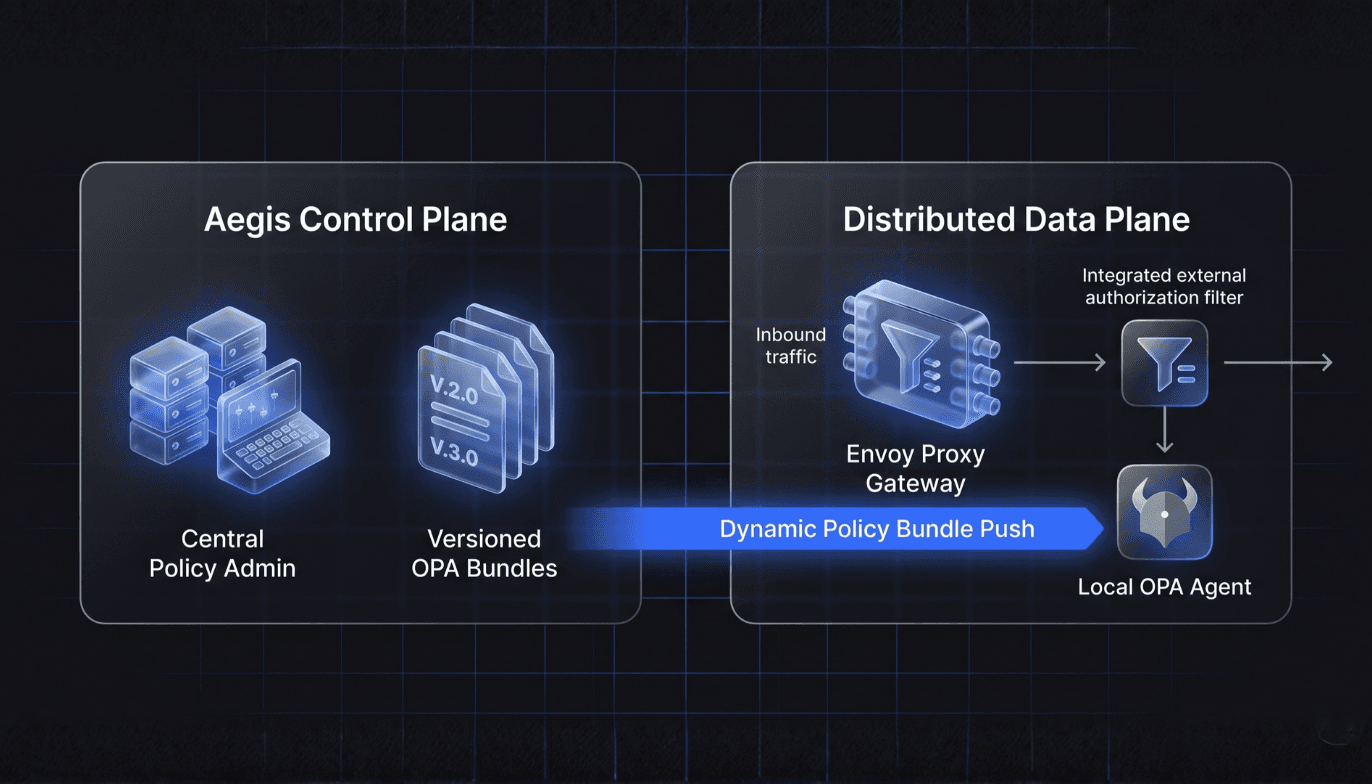
Core Architectural Principles of the Aegis Stack:
- Enforce Policies Outside the Model: LLMs cannot be trusted to self-regulate or adhere to system prompt constraints. Policies must execute in a hard control layer (gateway, sidecar proxy, or orchestration layer) that inspects inputs, outputs, retrievals, and tool calls independently of the model itself.
- Shift from Static Rules to Semantic Evaluation: Keyword matching and regex-based DLP engines fail against paraphrasing, algorithmic inference, and complex text synthesis. The architecture uses specialized classifiers that reason over intent, topic, and semantic sensitivity.
- Treat Outputs as Untrusted by Default: Models can leak sensitive configuration files, combine domains across permission boundaries, or hallucinate non-existent promotional guidelines even when user inputs are perfectly clean. Post-generation enforcement—redaction, generalization, response truncation, or confidence dampening—must inspect payloads before they return to the caller.
- Log Enforcement Decisions, Not Just Events: Auditors and regulators demand explicit explainability, not raw telemetry streams. Capture why a response was modified, truncated, or denied (the specific matching rule, observed context, and input signals), establishing a defensible record of control.
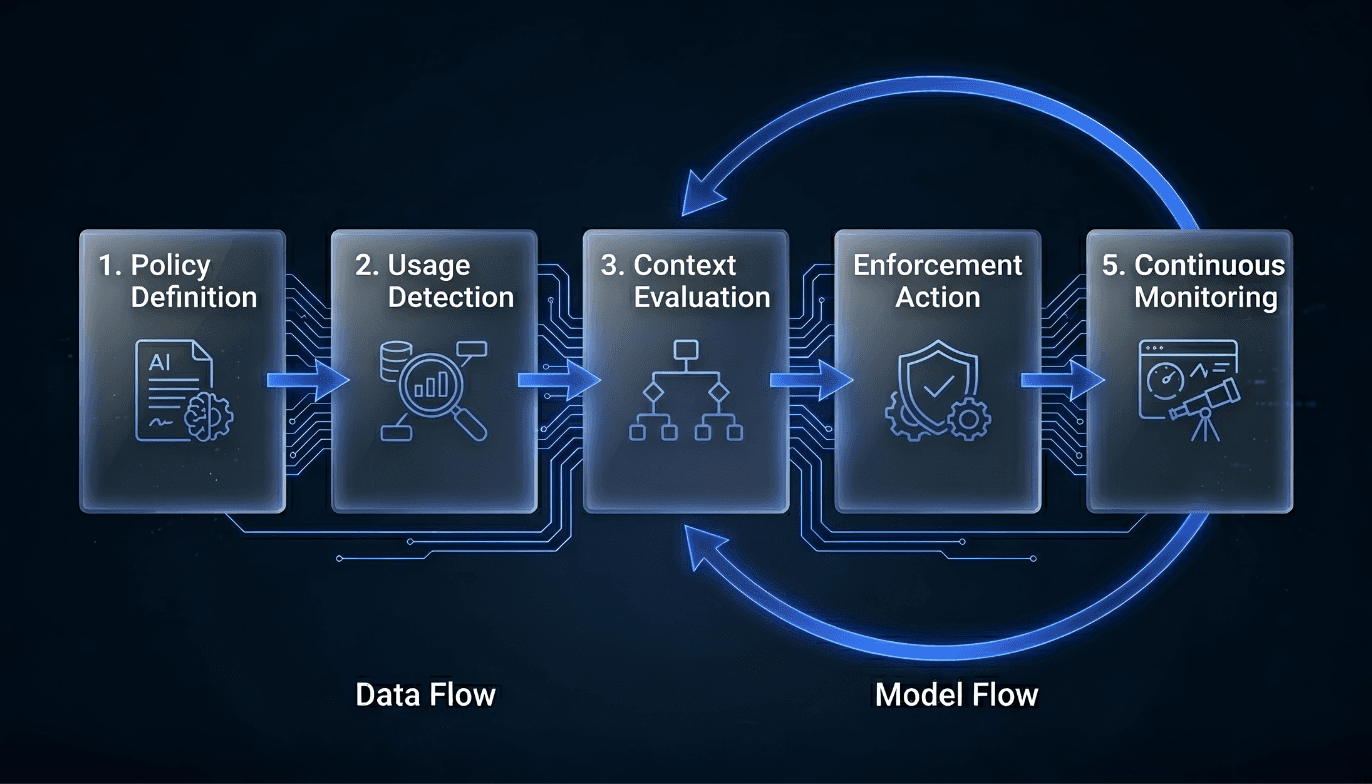
5. The Five Stages of the AI Enforcement Process
Implementing a production-grade enforcement model requires a continuous, lifecycle-aware operational pipeline.
5.1. Policy Definition and Scoping
High-level regulatory requirements are translated into machine-readable constraints versioned alongside core code. Scoping determines exactly where policy must intervene: pre-generation (restricting vector database retrieval sources), post-generation (output redaction), or at the orchestration layer (blocking malicious tool invocations).
5.2. AI Usage Detection
The system executes continuous discovery across sanctioned and unsanctioned tools alike. Because AI usage can bypass deployment pipelines and appear organically inside browser extensions, embedded copilots, and third-party APIs, detection must monitor network-wide patterns to prevent the growth of an unmanaged shadow AI layer.
5.3. Context and Risk Evaluation
Policy engines evaluate multiple environmental signals simultaneously: user role, session tokens, semantic query intent, conversation state history, retrieved source sensitivity, and tool access parameters. Because AI systems do not produce binary variables, risk scoring and confidence thresholds are utilized rather than simple pattern matching.
5.4. Enforcement Actions
Hard denials are disruptive and incentivize users to look for shadow alternatives. The system prioritizes graduated, safe responses: modifying outputs (redacting PII or generalizing clinical metrics), constraining tool execution bounds, or halting the request to enter a stateful wait-state for human-on-the-loop review.
5.5. Continuous Policy Monitoring
Algorithms evolve as vendors update models, prompt distributions shift, and data sources adapt. The system monitors enforcement outcomes—tracking which rules trigger frequently and analyzing how user behavior shifts over time—to feed back into continuous policy tuning, ensuring compliance remains dynamic.
6. The Agentic SOC: Deploying AI to Monitor AI
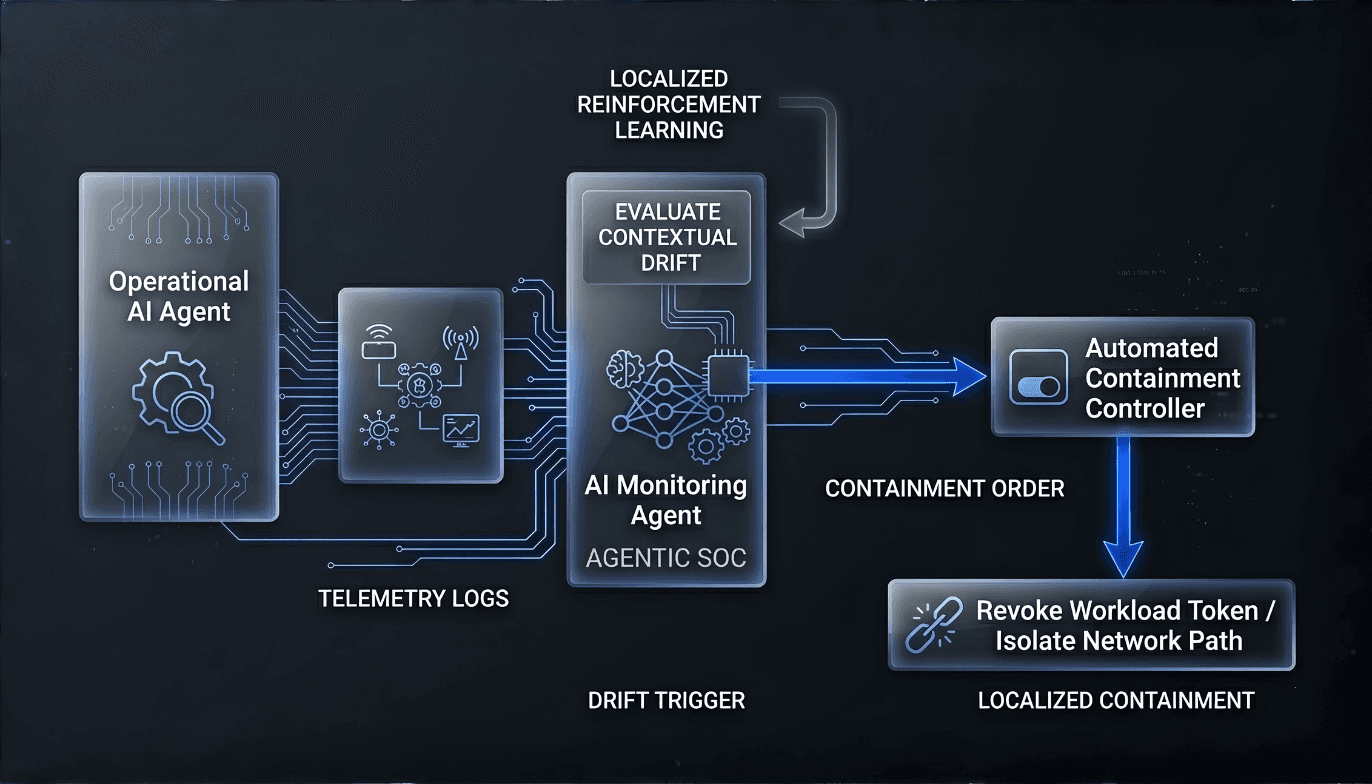
The structural latency inherent in a traditional, human-dependent Security Operations Center (SOC) represents a massive liability when defending against automated AI risks. A classic analyst workflow—where a telemetry alert is ingested, compiled, prioritized by a SIEM, and dropped into an investigative queue—introduces hours of latency.
When an autonomous system encounters a prompt injection or model drift error, it can execute an unauthorized data move or manipulate internal state records in under two minutes.
Waiting for a human response chain is an operational failure. The only architecturally sound response to a threat environment operating at machine speed is the deployment of an Agentic SOC: an operational model where specialized AI monitoring agents continuously govern operational AI agents.
The moment an operational agent's system call path drifts from its established baseline, the monitoring layer bypasses slow human approval chains to execute automated containment runbooks instantly: it revokes the workload's short-lived JWT token, modifies gateway routing tables to isolate the container, and aggregates the trace data for human operators. The human security team moves from being first responders to being systemic commanders—setting macro risk parameters and reviewing edge cases while the machine-speed monitoring layer manages the sheer volume that human attention cannot sustain.
7. Standards & Control Framework Matrix
To eliminate policy theater completely, organizations must map their real-time controls directly to global compliance and safety standards.
Global Framework Intersections
Governance Benchmark | Core Obligation | Real-Time Enforcement Control Implementation |
NIST AI RMF (GOVERN) | Continuous, contextual, and lifecycle-aware risk management across systems. | Dynamic evaluation of inputs, outputs, and tool calls using context-aware policy engines in near real time. |
ISO/IEC 42001 & 23894 | Institutional accountability, repeatability, and consistent control tracking across vendors. | Externalizing and logging enforcement decisions independently of the model to capture why an action was blocked. |
EU AI Act Core Mandates | Demonstrable post-deployment monitoring, human oversight, and runtime safeguard execution. | Implementing in-path runtime gateways that evaluate proposed transactions before side effects can hit production systems. |
OWASP LLM Security Matrix | Mitigating sensitive data exposure, indirect injection, and over-permissive agent behaviors. | Enforcing strict post-generation verification, payload sanitization, and short-lived, task-scoped workload identity. |
Conclusion: Turning Policy into Infrastructure
Enterprises lose control of AI because their policies are not enforceable at runtime across non-deterministic systems that act, adapt, and scale faster than traditional security architectures were designed to handle. A written principle is not a control plane.
By decoupling global governance rules from local model logic—utilizing a Runtime AI Gateway pattern backed by Open Policy Agent bundles and an automated Agentic SOC—organizations can turn security from a post-action documentation exercise into live execution infrastructure. Implement deterministic runtime enforcement, protect the execution path, and ensure your autonomous workforce remains a managed corporate asset.
Frequently Asked Questions (FAQ)
Q1: Why are traditional access controls insufficient for non-deterministic AI models?
A: Traditional engines assume predictable execution paths and repeatable, binary outcomes. AI models generate responses stochastically based on contextual inputs, semantic history, and dynamic tool-chaining, requiring a policy engine that evaluates the meaning and intent of outputs rather than static system permissions.
Q2: What is the risk of relying on vendor certifications or system prompts for security?
A: System prompts and vendor assurances are "soft controls" that reside inside the model's environment and can be easily bypassed via prompt injection, adversarial context manipulation, or model drift. Real security requires "hard controls" implemented in an external infrastructure layer completely independent of the model's logic.
Q3: How do context-based policies differ from standard Role-Based Access Control (RBAC)?
A: Standard RBAC only answers who is requesting access to an asset. Context-based policies evaluate environmental signals—including user role, semantic intent, data classification tags, and tool usage risk—to determine under what specific circumstances an automated response or action is acceptable.
Q4: Why is document retention and full discoverability critical for AI systems?
A: Under frameworks like the EU AI Act and existing employment laws, the legal liability for an automated decision (such as hiring or transaction approvals) remains entirely with the employer, not the AI vendor. Organizations must maintain complete, discoverable audit trails capturing input data, model updates, and decision rationales to serve as a legal defense mechanism.
Q5: What is "Model Drift" and how does it create hidden operational exposure?
A: Model drift is the gradual performance degradation that occurs when live production data shifts away from the conditions used during initial validation. A model that passed a bias or risk audit during deployment can shift over time, generating non-compliant or discriminatory outcomes silently without crashing the application.
Q6: What does an "Evidence Event" capture inside an immutable store?
A: An evidence event captures the full context of an operational intervention. Instead of logging raw event telemetry, it records exactly why a response was modified, truncated, or denied—capturing the active policy ID, matching context rules, and observed environmental signals to provide audit-ready explainability.
Q7: How do automated remediation playbooks handle an active runtime threat?
A: When a behavioral anomaly exceeds risk thresholds, the system fires automated runbooks that reduce risk while preserving system usability. This includes dynamically redacting PII from output streams, restricting an agent's tool execution scope, or immediately revoking an asset's short-lived JWT token to isolate the node.
Q8: Why must testing be conducted continuously under attorney-client privilege?
A: In the absence of a unified federal oversight framework, organizations are responsible for designing their own testing criteria. Conducting continuous bias audits and performance re-validations under attorney-client privilege allows legal and technical teams to diagnose and fix emergent system errors without immediately exposing the firm to regulatory penalties or litigation risk.