
Ethical Considerations for Autonomous Decision-Making
Practical guide to translating AI ethics into policy-as-code, runtime controls and auditable trails for agentic systems.
Embedding Ethics into Runtime Policy for Agentic AI
Autonomous agents are moving from prototypes to production, and with that shift comes a simple, uncompromising mandate: ethical risk must be managed at runtime, not only in post-hoc reviews. This article explains why ethics matter for agentic workflows, shows how ethics map to policy-as-code, and details operational controls and auditability patterns you can apply today. It also presents Aegis — a runtime policy and observability fabric purpose-built to enforce least privilege, approvals and tamper-proof audit trails for multi-agent systems. The goal is practical: give security and platform teams concrete patterns and policy examples that satisfy both operational needs and regulatory expectations.
Why ethics matter for autonomous agents
Autonomous agents make consequential decisions—payments, triage recommendations, hiring shortlists—that can cause harm if unchecked. Regulators are already shifting the burden toward documented lifecycle risk management: the EU AI Act mandates that providers of high-risk systems maintain risk management, technical documentation, and record-keeping to enable oversight. (Digital Strategy)
Beyond regulation, the market is moving fast: research and industry reports show rapid adoption of agentic solutions alongside warnings about failed projects and trust gaps. Gartner and other analysts forecast aggressive adoption but caution that many early agentic initiatives will be scrapped without robust governance. (Reuters)
Key ethical risks for agentic systems
- Unintended harmful actions (fraudulent payments, unsafe clinical advice).
- Discrimination (demographic inference, biased shortlists).
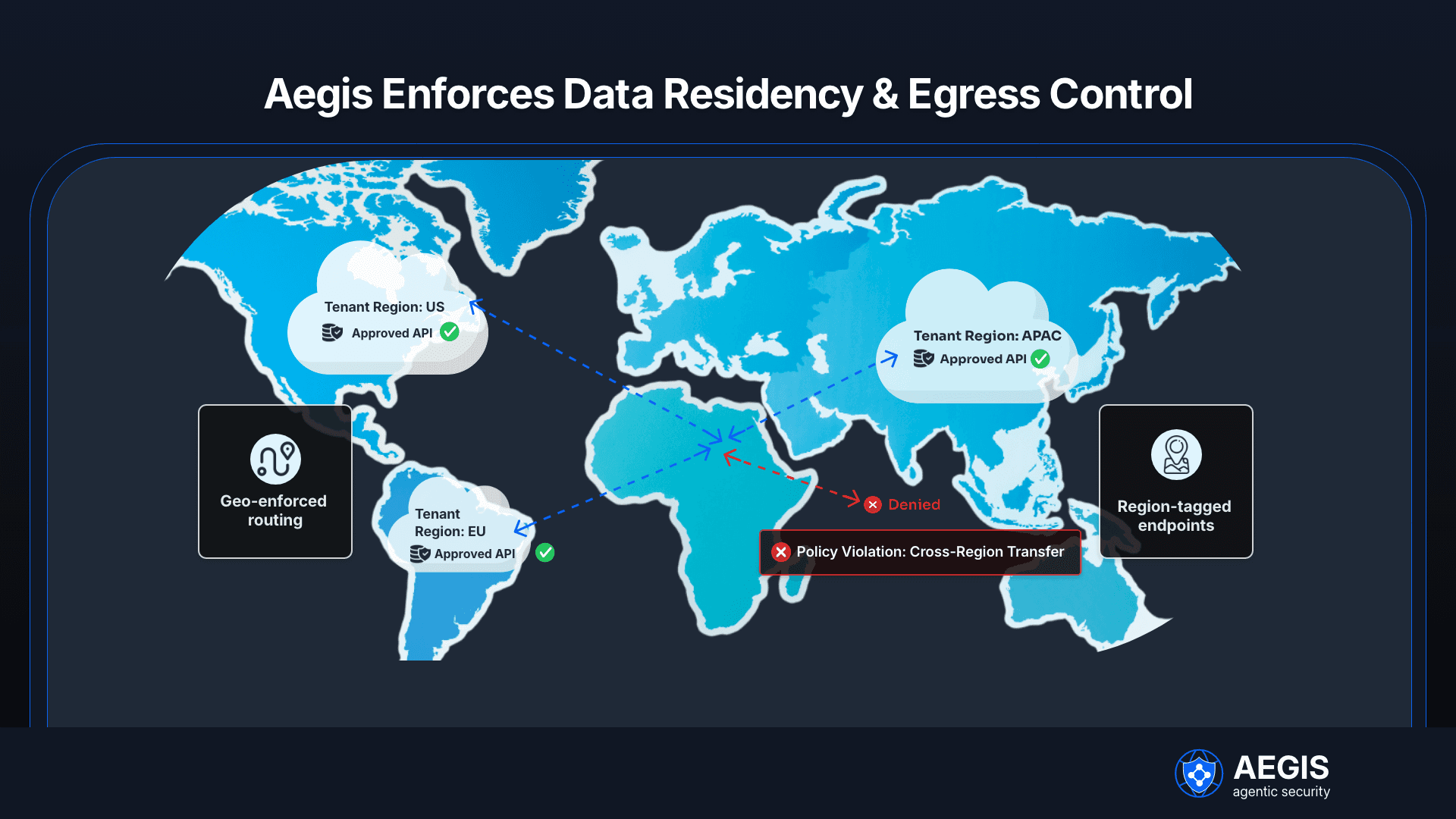
- Data privacy and exfiltration (unauthorised egress, PII leakage).
- Lack of provenance and accountability (who approved or overrode a decision).
These risks mean that ethics can’t be an afterthought. They must be encoded into policy, enforced at the agent↔tool boundary, and documented in a manner suitable for audits and regulatory review.
Translate ethics into policy-as-code
Policy-as-code is the natural bridge from abstract ethical principles to enforceable rules. Rather than relying solely on committees or post-hoc audits, encode constraints that express acceptable and unacceptable agent behavior.
Policy primitives and actions
Define a clear, small set of policy actions that correspond to ethical controls:
- allow — permit the call as-is.
- deny — block the call and return a policy error.
- sanitize — redact sensitive fields (PII/PHI) before the tool sees them.
- approval_needed — pause and require a human attestation/override.
- attest — attach provenance metadata and policy version to the response.
These primitives map directly to practical rules: e.g., finance-agent → create_payment with max_amount: 5000 → allow; otherwise approval_needed.
Example policy snippet (YAML)
agent: finance-agent
allowed_tools:
- name: stripe-payments
actions:
- create_payment
conditions:
max_amount: 5000
on_violation: approval_needed
Operational recommendations
- Store policies as versioned bundles with immutable IDs.
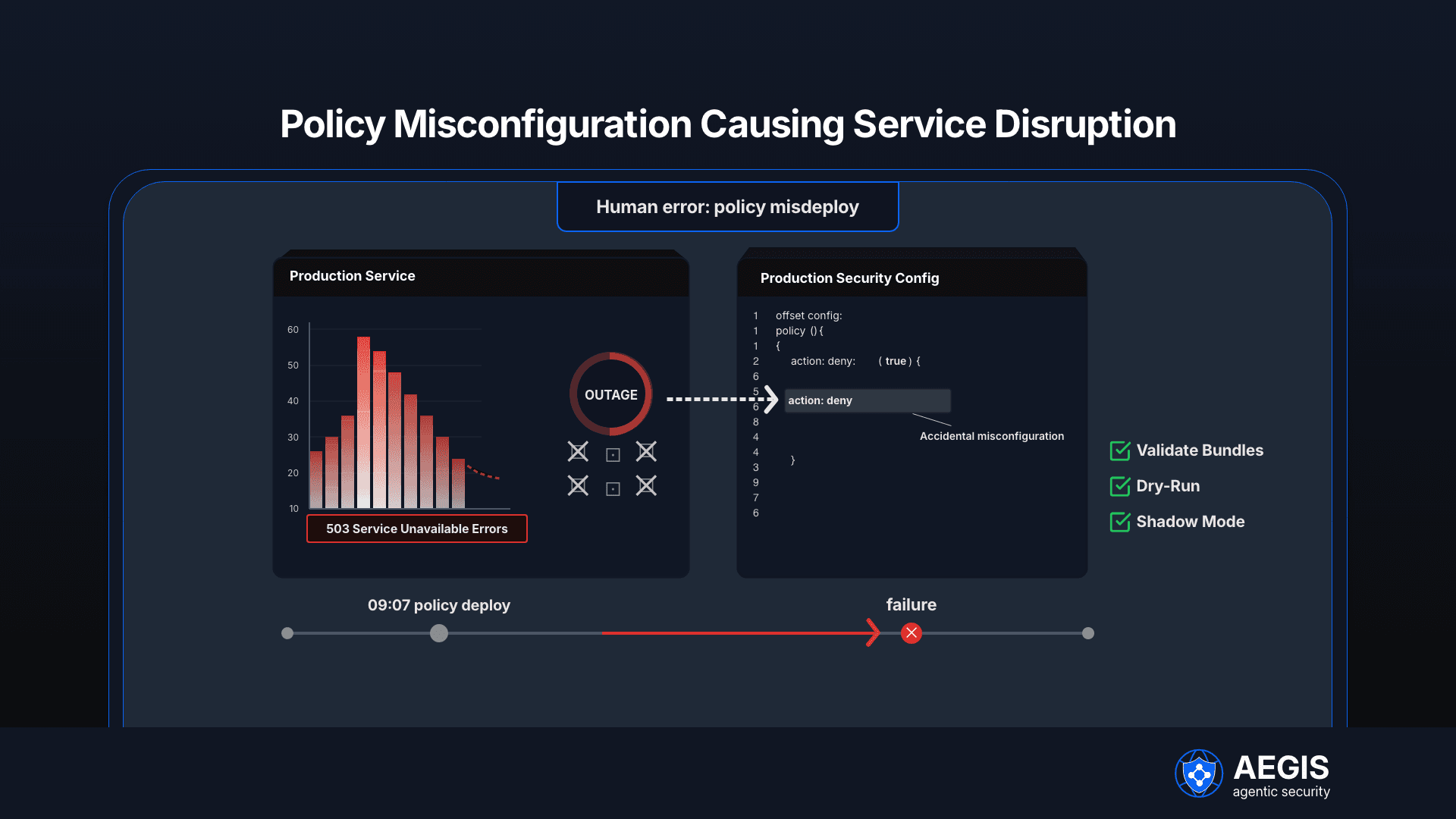
- Use hot-reload to push updates with canary/shadow rollout.
- Support shadow mode to collect would-deny metrics before enforcement.
Operational controls and auditability
Encoding rules is necessary but not sufficient. Runtime enforcement, low-latency decisions, and authoritative audit trails are required to operationalize ethics.
Runtime enforcement and identity
Place a lightweight gateway between orchestrator and tools. Enforce per-agent identity (short-lived tokens), parameter validation, domain allowlists, and per-agent budgets. This prevents lateral coercion (planner → finance) and controls egress to approved endpoints.
Observability & telemetry
For each agent call, emit OpenTelemetry spans and structured logs containing:
- agent_id, tool, action
- policy_version, decision_reason, approval_id
- request parameters (redacted when needed)
This data supports SOC reviews, FinOps analysis and regulatory evidence packages.
Immutable audit chains and approvals
For high-risk decisions require approval workflows that produce attested overrides (one-time tokens) and store approval metadata in the audit trail. Immutable manifests or signed manifests (e.g., using Ed25519 signatures for policy bundles and approval tokens) provide non-repudiation for compliance audits.
Table: Runtime controls and purpose
Control | Purpose | Example enforcement |
Per-agent identity & short tokens | Attribution & replay prevention | Ed25519-signed JWT with agent scope |
Parameter validation | Prevent dangerous inputs | Regex/whitelist for account IDs, amount ranges |
Egress allowlist | Prevent exfiltration | Block unknown domains |
Budget & rate limits | Cost and abuse control | Daily budget $20, RPS limit 5 |
Approval workflow | Human oversight for high risk | Slack/Teams approval → override token |
Shadow mode | Safe rollout | Collect would-deny metrics before enforce |
Case studies and playbooks
Below are short operational playbooks and a usage table that maps ethical risk categories to concrete policy actions.
Use case: Healthcare triage agent
Policy: clinical-agent may read EHR records for purpose=care but cannot initiate prescriptions. Any write/medication action → deny or approval_needed requiring clinician attestation. Deterministic DLP redacts SSNs and DOB from outbound payloads.
Use case: Hiring assistant
Policy: Prohibit demographic inference and block any action that returns protected-class scores. Sanitize outputs and route adverse decisions into a human review queue with SLA.
Table: Ethical risk → policy mapping
Ethical risk | Policy action | Operational guardrails |
Financial fraud | deny / approval_needed | max_amount thresholds, audit attestation |
Privacy leakage | sanitize | regex redaction, data residency routing |
Bias in hiring | deny | block demographic inferencing, human queue |
Runaway spend | deny | per-agent budgets + alerts |
Aegis in the stack
Aegis is designed to be the runtime policy and observability fabric for multi-agent systems. It provides:
- Agent registration and identity management with short-lived tokens.
- Policy-as-code that compiles to fast evaluators (OPA/Rego bundles) and hot-reloads into the data plane.
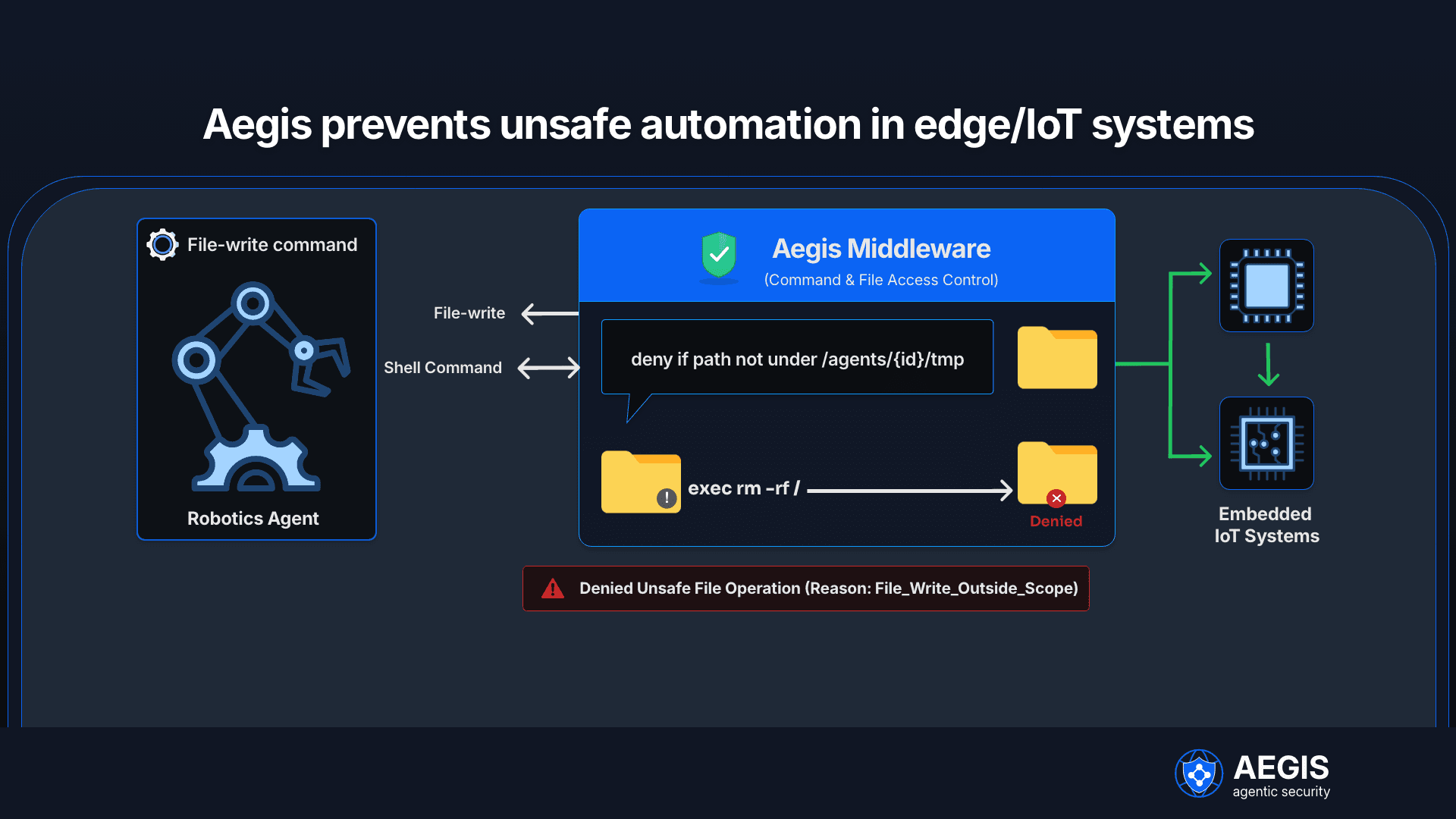
- A sidecar/forward proxy that inspects calls, enforces allow/deny/sanitize/approval_needed logic, and emits OTel spans for each decision.
Aegis enforces least-privilege across agents and tools, preventing privilege escalation via tool chaining and parameter injection. Approval workflows integrate with Slack and Microsoft Teams to scale human-in-the-loop decisions while producing a signed override token and immutable audit record for each approved action. The gateway supports shadow mode to allow safe tuning, and telemetry dashboards (Prometheus/Grafana) highlight would-block traffic and top offenders.
Operational capabilities
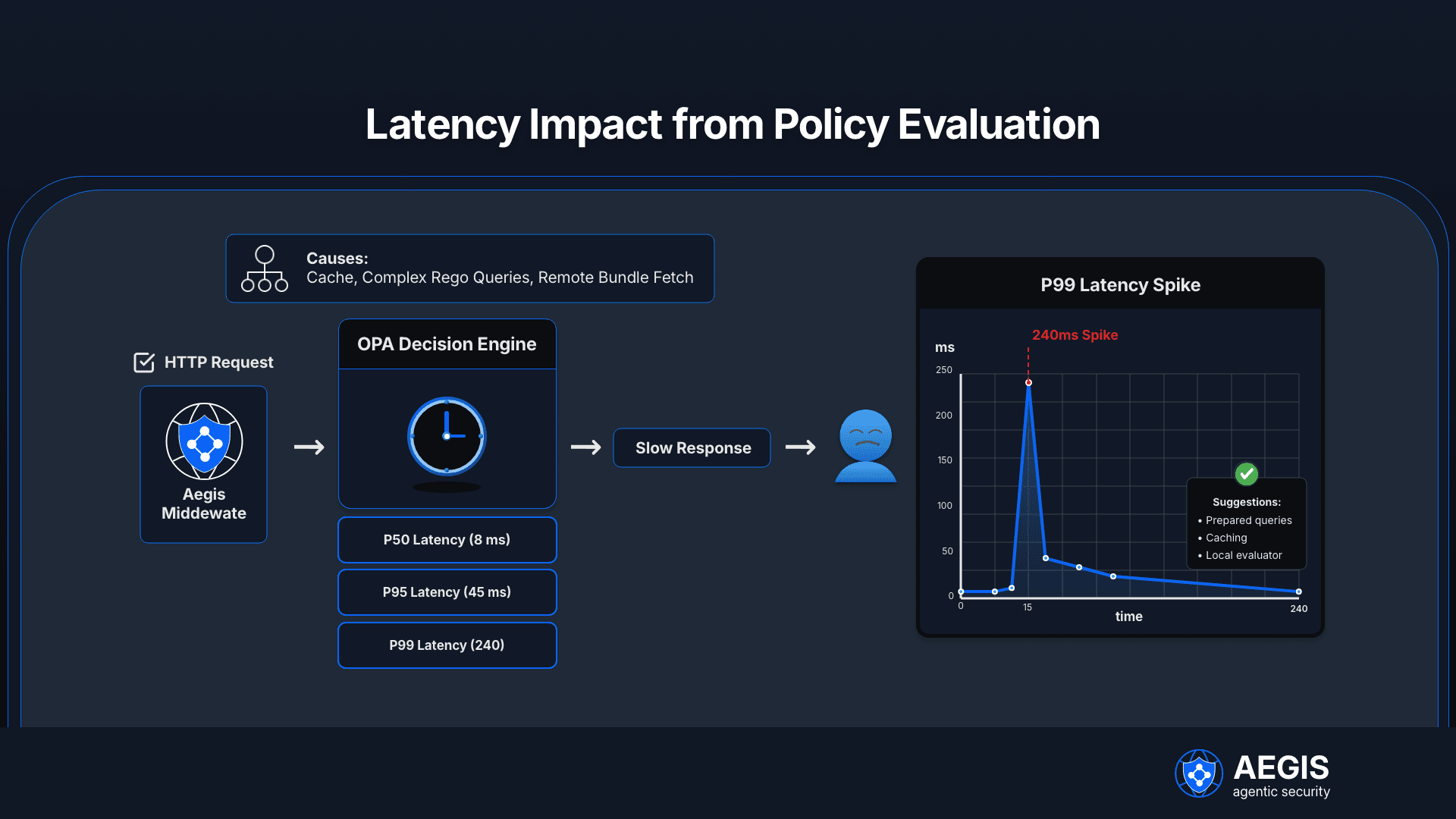
- P99 decision latency target ≤ 20 ms using prepared OPA queries and caches.
- Per-agent budgets, RPS limits and budget exhaustion policies.
- Signed policy bundles and audit signing options for compliance readiness.
- Integration SDKs for LangChain / LangGraph and extensible middleware for other orchestrators.
Implementation checklist & playbook
- Inventory agent-tool surface and classify high-risk actions.
- Define policy primitives (allow, deny, sanitize, approval_needed).
- Start with shadow mode; collect would-deny data for 7 days.
- Tune regexes, thresholds and quotas; move to enforcement per connector.
- Enable approval routing (Slack/Teams) with one-time overrides.
- Archive signed audit bundles and export to SIEM for SOC review.
Frequently Asked Questions
Q1: How does policy-as-code meet regulatory requirements like the EU AI Act?
A: By producing versioned, documented policy bundles, recording policy_version and decision provenance for each action, and maintaining a risk management lifecycle (shadow → enforce → audit). See EU AI Act requirements for high-risk systems. (Artificial Intelligence Act EU)
Q2: What latency should I expect from runtime policy checks?
A: A well-engineered data plane using prepared OPA queries and in-memory caches targets P99 decision latencies under 20 ms; proxy overhead should be measured separately.
Q3: How do approvals scale if many calls require human review?
A: Design policies with thresholds and quotas to reduce noisy approvals, use Slack/Teams integrations and batch approvals where appropriate, and employ shadow mode to refine granularity before enforcement.
Q4: Can policies prevent data exfiltration to unknown domains?
A: Yes. Enforce egress allowlists in the gateway and inspect outbound destinations. Combine with DLP sanitization for payloads before they leave the environment.
Q5: What evidence should I produce for an auditor?
A: Signed audit logs (spans + policy_version + approval_id), policy bundle manifests, dry-run and shadow mode reports, and a decision catalog that links incidents to remediation actions.
Practical next steps
Agentic AI delivers value, but responsible deployment requires a tight feedback loop between policy, runtime controls and auditability. Start small: classify risk, deploy shadow policies, instrument telemetry and iterate. Aegis provides a focused runtime fabric (policy-as-code, enforcement gateway, approvals and signed audit trails) to operationalize ethics without blocking developer velocity.