AI Agents for Transportation and Logistics Optimization
Learn how agentic AI and Aegis secure multi-agent logistics systems to optimize routes, reduce costs, and enforce safe automation in transportation.
AI Agents for Transportation and Logistics Optimization
Transportation and logistics systems are undergoing a structural transformation driven by agentic AI—autonomous, goal-driven systems that optimize operations, routing, and resource allocation in real time. Yet, as these AI agents begin to control routing decisions, vendor selections, and even payment triggers, security and governance become existential concerns.
Enter Aegis, Aegissecurity agentic AI security mesh. It provides runtime policy enforcement, compliance visibility, and least-privilege control for multi-agent logistics environments. This article explores how logistics optimization agents work, the challenges of securing them, and how Aegis acts as a real-time safety and compliance layer for enterprise-grade logistics operations.
The Evolution of Logistics Optimization
From Static Planning to Autonomous Orchestration
Traditional route planning relied on static maps, linear optimization, and dispatcher overrides. While effective for predictable demand, this approach fails under dynamic conditions—weather changes, supply chain disruptions, or real-time order surges.
By contrast, AI logistics agents—forecasting, routing, and execution agents—collaborate in real time to continuously plan, simulate, and adjust. They leverage data from telematics, traffic feeds, and demand forecasts to dynamically optimize deliveries and reduce inefficiencies.
These agents handle tasks such as:
- Strategic planning: determining vehicle allocation and shift scheduling
- Tactical routing: adjusting delivery sequences to minimize travel time
- Execution: monitoring driver status, geofencing compliance, and delivery validation
- Recovery: responding to incidents and reassigning deliveries on the fly
A hybrid of machine learning–based ETA prediction and combinatorial solvers drives their optimization capabilities.
Core Metrics and Performance Indicators
KPI | Definition | Optimization Target |
Route Miles | Total miles driven per delivery cycle | ↓ 15–25% |
On-Time % | Deliveries meeting SLA windows | ↑ 10–20% |
Fuel Consumption | Aggregate fleet fuel cost | ↓ 8–12% |
Empty Miles | Non-revenue miles per vehicle | ↓ 10–30% |
Time-to-Recovery | Mean time to reroute after incident | ↓ 40–60% |
(Source: McKinsey & Company research on AI-driven logistics optimization)
The Problem: Risk and Uncertainty in Agentic Logistics
As multi-agent orchestration expands in logistics, new risks emerge that traditional systems never faced.
1. Unchecked Agent Authority
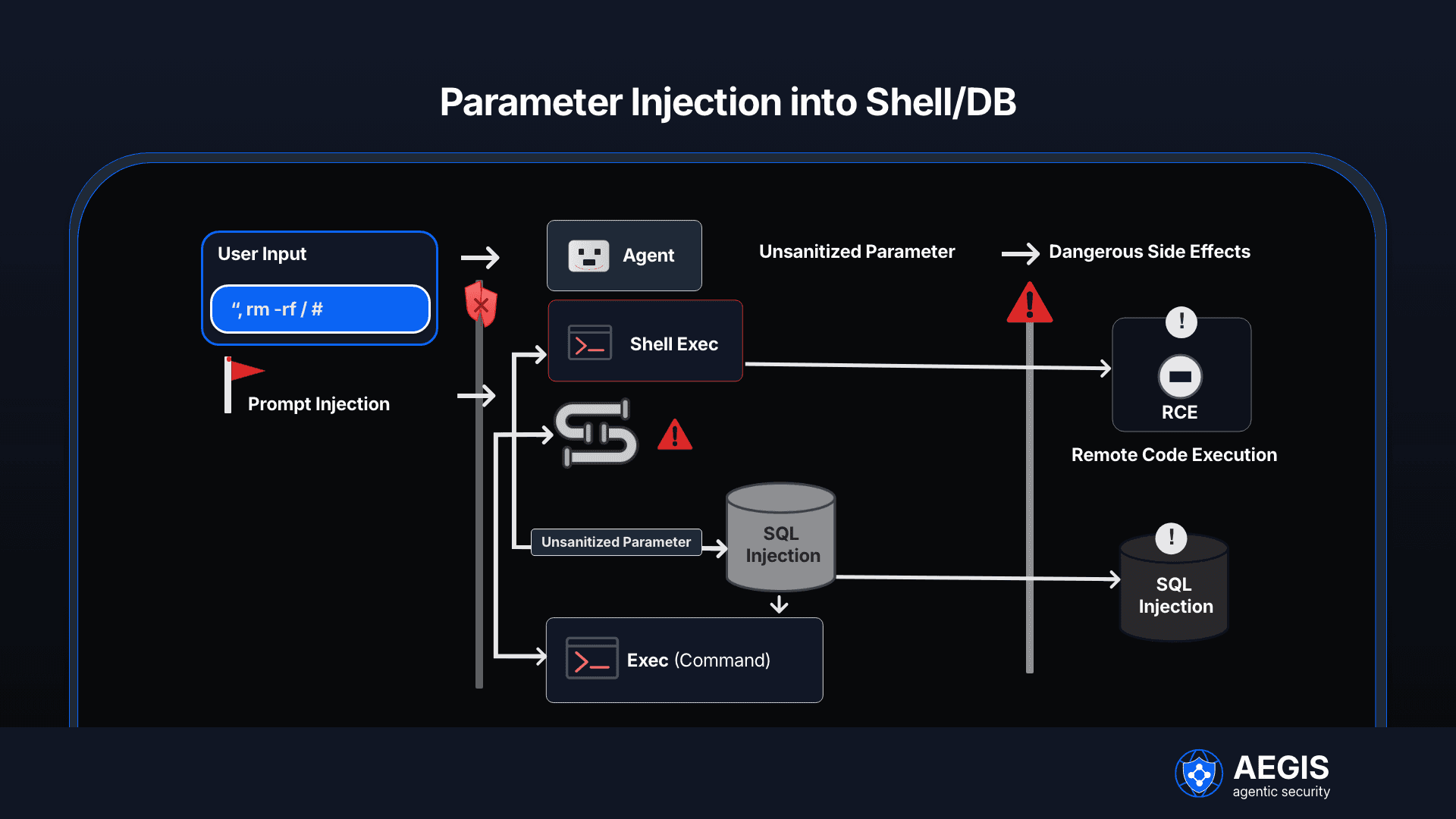
A dispatcher agent may reroute fleets based on predictive data—but what if its cost function is corrupted or manipulated? Without constraints, agents could issue unsafe or noncompliant commands, overworking drivers or violating road restrictions.
2. Economic and Compliance Exposure
Procurement and planning agents often negotiate spot carriers or adjust delivery zones. These actions can trigger unauthorized vendor payments or budget overruns if not gated by policy checks.
3. Lack of Observability
Each AI agent acts autonomously; without visibility into which agent triggered which call, organizations lose traceability—a major compliance red flag for regulated sectors like retail supply chains, healthcare transport, and cold-chain logistics.
A secure logistics environment thus requires not just smarter agents, but controlled and auditable ones—with deterministic boundaries and verifiable accountability.
Aegis: The Security Mesh for Agentic Logistics
What Is Aegis?
Aegis is a runtime policy and observability gateway that enforces least-privilege access across AI agents and their toolchains. Think of it as the Istio + OPA for AI agents: it sits between the logistics orchestrator (e.g., LangGraph or AgentKit) and the tools or APIs agents use (e.g., TMS, carrier APIs, payment systems).
Every agent request—whether it’s a route recalculation, a fuel spend, or a vendor API call—passes through the Aegis Gateway, which evaluates it against defined policies in real time.
Key Capabilities
Capability | Description | Logistics Application |
|---|---|---|
Policy-as-Code | YAML/JSON policies define allowed actions, parameters, budgets, and conditions | Restrict dispatch agents to approved regions |
Runtime Enforcement | Sidecar proxy evaluates every API call via Open Policy Agent (OPA) | Block unsafe reroutes or unauthorized payments |
Identity & Egress Control | Short-lived JWTs per agent, domain allowlists | Ensure telematics data only reaches approved endpoints |
Human-in-the-Loop Approval | Slack/Teams integration for high-risk operations | Approve exceptions such as carrier substitutions |
Observability & Auditability | OpenTelemetry traces with policy version and decision reason | Trace which agent made which routing decision |
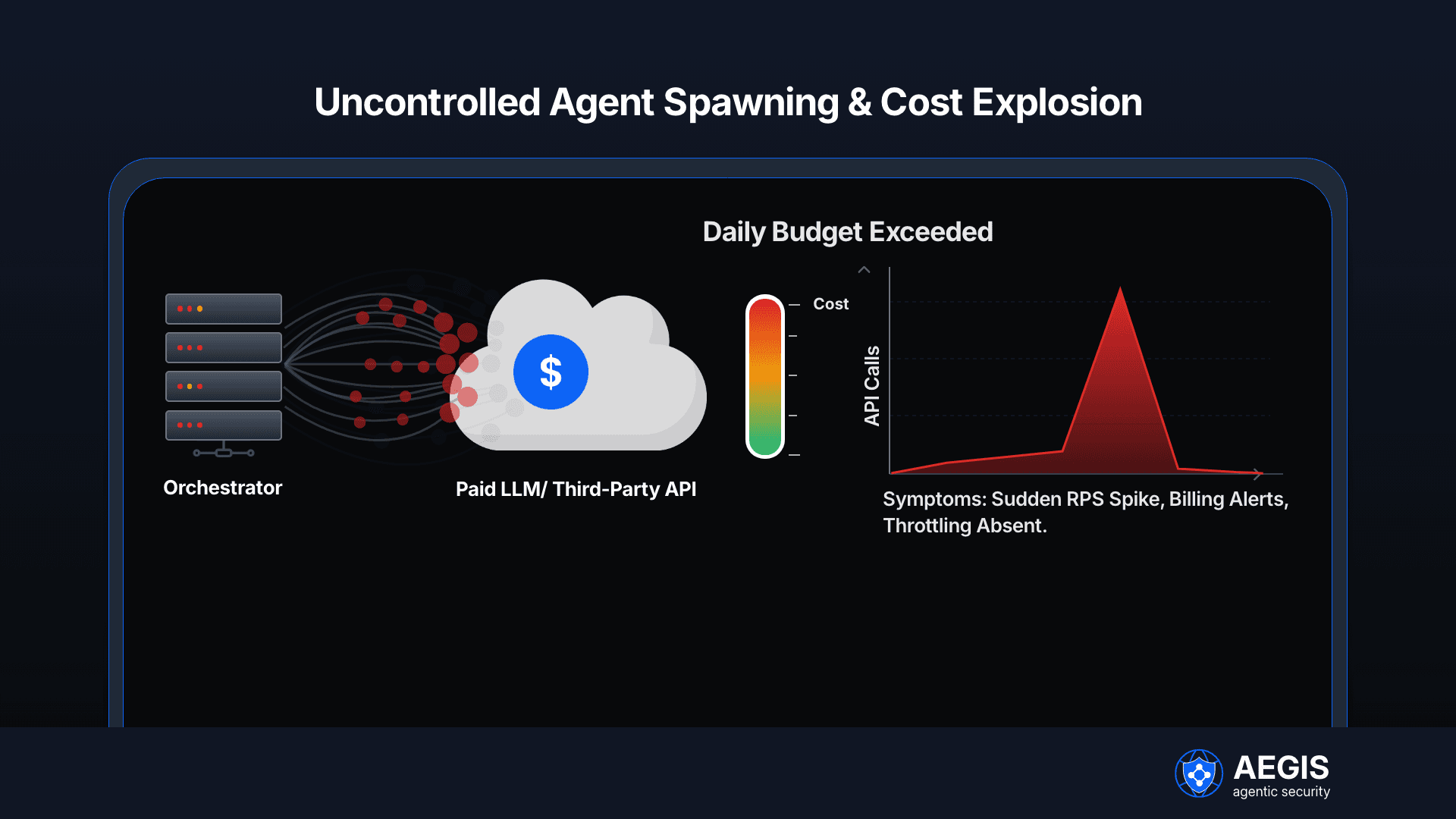
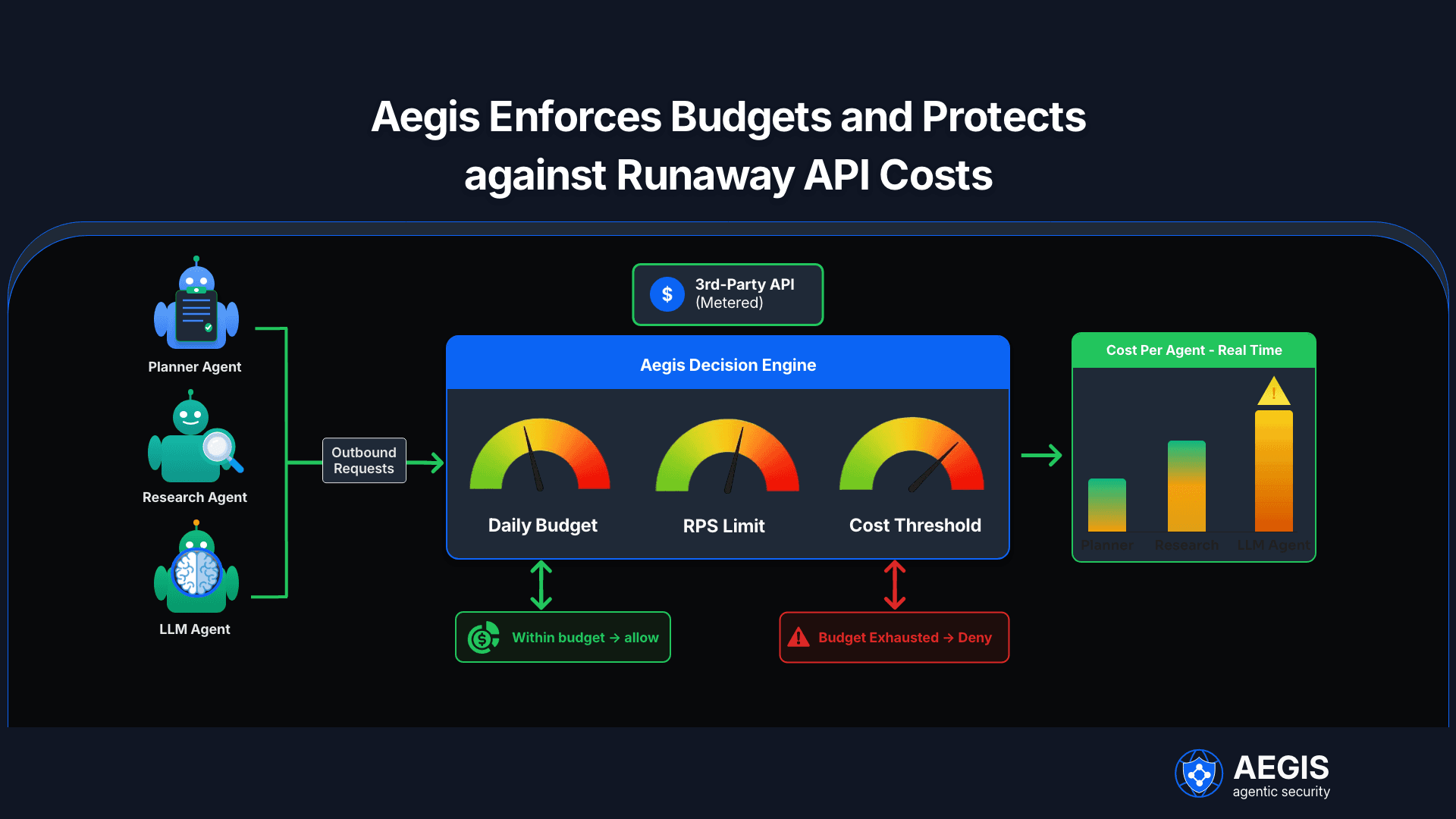
Cost Governance | Per-agent budgets and rate limits | Enforce spend caps on dynamic vendor engagements |
How Aegis Secures Multi-Agent Logistics Workflows
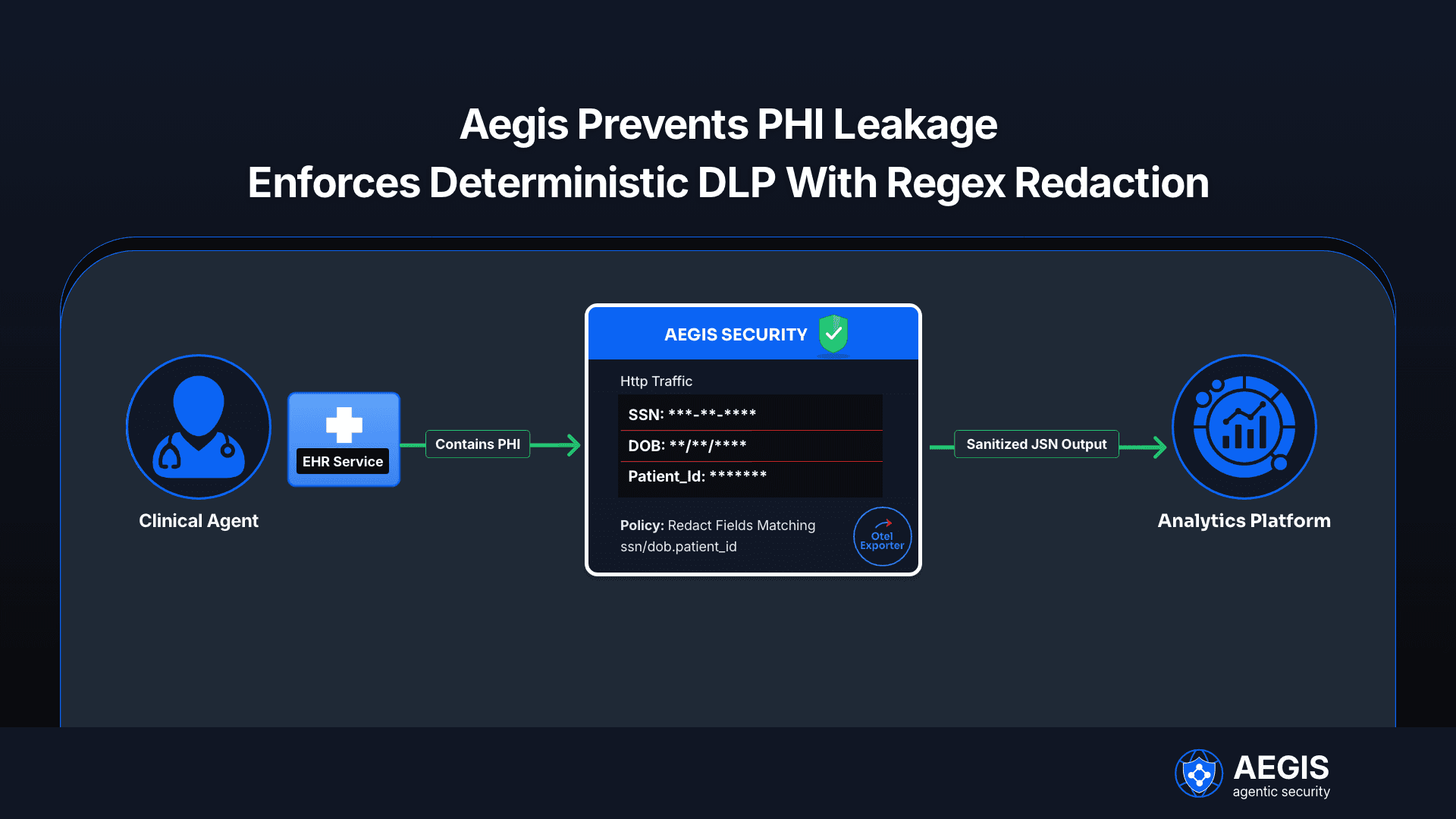
Below is a simplified flowchart illustrating Aegis’s gating across the agentic optimization pipeline.
1. Forecast
A demand-forecasting agent predicts volume surges using historical data and weather feeds. Aegis validates that the data sources are authorized and blocks any cross-region data transfers.
2. Plan
The constraint-solver agent generates routes using a combinatorial solver. Aegis ensures it cannot exceed regulatory driving hours or violate SLAs.
3. Execute
The driver-assist agent provides instructions and collects telemetry. Aegis enforces geo-fencing and prevents agents from issuing unsafe commands (e.g., routing through restricted zones).
4. Recover
A disruption agent responds to incidents. Aegis enforces cost thresholds before approving vendor substitutions or rerouting actions that might trigger spend spikes.
Comparing Solver Approaches in Logistics Agents
Solver Type | Description | When to Use | Typical Agents |
Heuristic | Greedy or nearest-neighbor search, fast but suboptimal | Large fleets with low time sensitivity | Basic routing agent |
Exact | Branch-and-bound or MILP solvers, guarantees optimality | Small fleets or critical delivery windows | Scheduler agent |
Metaheuristic | Genetic, simulated annealing, or hybrid solvers | Dynamic demand and uncertain conditions | Dynamic re-routing agent |
Aegis integrates seamlessly across solver types, enforcing policies regardless of computational method.
Case Study: Last-Mile Optimization with Safe Automation
A global courier firm deployed AI-driven route optimization during a holiday surge. When a local festival disrupted traffic, the disruption agent proposed reassigning deliveries to premium carriers.
Aegis intercepted the call, evaluated it against budget policies, and required human approval since the change exceeded the per-agent cost threshold. The result:
- 12% improvement in delivery punctuality
- 9% reduction in excess carrier spend
- Full audit trace of every automated reroute
This demonstrates Aegis’s agent safety and cost discipline in volatile logistics environments.
Implementation Framework for Secure Agentic Logistics
Phase 1: Shadow Mode Deployment
Run all logistics agents (planner, dispatcher, driver) through Aegis in shadow mode for two weeks. Collect would-block telemetry without enforcement to fine-tune conditions.
Phase 2: Controlled Enforcement
Activate runtime blocking for defined actions (e.g., payment creation, route override). Integrate Slack/Teams for policy-based approvals.
Phase 3: Continuous Policy Tuning
Establish a governance loop to monitor blocked actions, adjust thresholds, and automate budget reports.
Operational and Compliance Considerations
Identity and Access Boundaries
Aegis issues short-lived, signed JWTs identifying each agent. This ensures that a routing agent cannot impersonate a finance agent, mitigating privilege escalation between AI roles.
Auditable Decisions and Compliance Logging
Every decision—approval, denial, or sanitization—is logged with a cryptographic signature and linked to a policy version. This traceability supports transport safety regulations and ISO 39001 audits.
Safety and Cost Controls
- Restrict SSH or remote commands from agents
- Log telemetry for every routing decision
- Enforce driver-hour regulations and delivery SLAs
- Apply per-agent spend and fuel consumption caps
How Aegis Transforms Transportation AI Security
With Aegis, logistics firms can safely embrace automation without losing operational control. Key outcomes include:
- Reduction in unauthorized agent actions through policy-as-code
- Improved mean time to recovery after incidents via safe re-routing
- Compliance-ready logs supporting transportation and labor regulations
- Cost predictability from per-agent budgets and approval thresholds
- Cross-agent accountability via signed telemetry and OpenTelemetry integration
By embedding Aegis into their orchestration layers, transportation leaders can scale AI innovation while maintaining compliance and control.
Frequently Asked Questions (FAQ)
1. How does Aegis integrate with existing logistics management systems (TMS/WMS)?
Aegis functions as a sidecar or reverse proxy that intercepts agent-to-tool communications. It integrates natively with TMS/WMS APIs without requiring core code changes.
2. Does Aegis add latency to route planning operations?
Minimal—policy evaluations use Open Policy Agent with in-memory caching and prepared queries, achieving sub-20 ms decision times.
3. How can Aegis enforce driver-hour and compliance limits?
Aegis policies can define per-agent or per-region operational constraints. If a route violates regulatory hours, the request is automatically denied or flagged for approval.
4. Can Aegis manage costs from dynamic carrier sourcing?
Yes. Policies enforce per-agent spend thresholds and approval workflows for spot carriers or surge pricing events, providing FinOps-level visibility.
5. What’s the best way to pilot Aegis in logistics environments?
Start with a single route cluster, activate Aegis in shadow mode, compare KPIs against a human-dispatch baseline, and gradually extend enforcement to all agents.
6. Does Aegis support multi-tenant visibility for managed logistics providers (MSSPs)?
Yes. Aegis isolates tenants, signs all telemetry, and provides SOC-ready audit logs to prevent cross-tenant interference or policy leakage.