Agents for Environmental Monitoring and Sustainability Initiatives
Runtime governance for agentic environmental monitoring — enforce least-privilege, validate actuator commands, and audit every action.
.png&w=3840&q=75)
Aegis: Agent Governance for Environmental Monitoring and Actuator Safety
Environmental monitoring projects are moving quickly from manual ETL pipelines to agentic, real-time architectures that ingest sensor streams, third-party APIs, and ML models to act autonomously. The upside is faster detection and response; the downside is new operational risks: sensitive location leakages, runaway third-party costs, and incorrect actuator calls (for irrigation, pumps, valves, emission controls) that can cause safety incidents or regulatory violations. Recent industry studies show organizations are actively scaling agentic systems — but many are also worried about governance and cost. (McKinsey & Company)
This post explains why runtime governance matters for sustainability-focused agents, the key risk vectors, and how Aegis — a runtime policy and observability gateway — enforces least-privilege, parameter validation, rate and budget controls, and auditable decision trails for IoT actuators and other environmental automation.
The problem: agentic monitoring amplifies both value and risk
Legacy patterns (manual ETL, scheduled jobs, human review) are slow and brittle for time-critical events such as flood response or emission spikes. Agentic pipelines can plan, correlate multiple inputs, and act immediately — but any unsupervised action crossing the physical world (actuators) needs strong runtime checks.
Common failure modes:
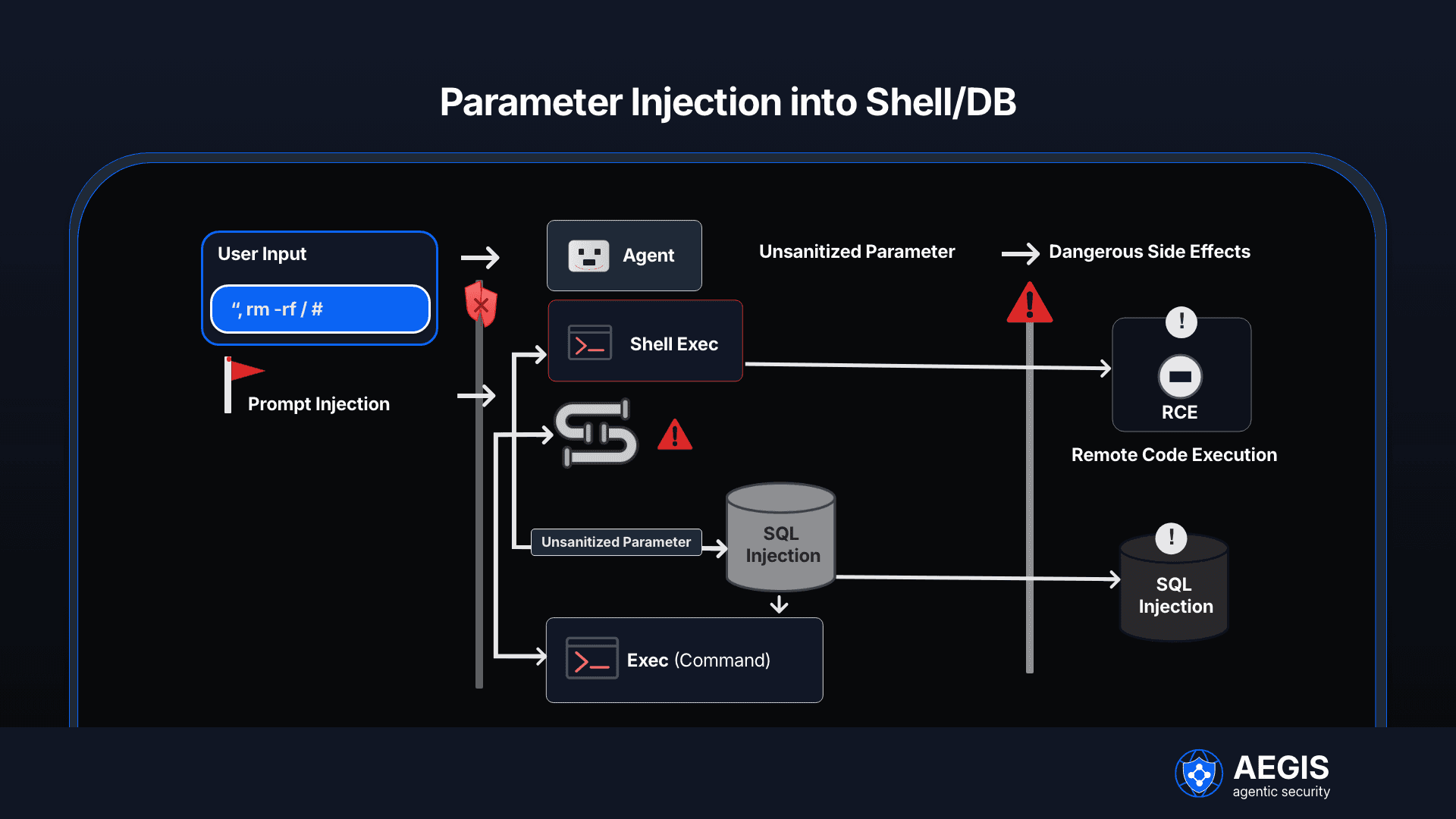
- Parameter injection: noisy telemetry causes an agent to request excessive water flow.
- Privilege chaining: a planner agent instructs a downstream actuator agent to exceed allowed ranges.
- Uncontrolled spend: agents call expensive satellite imagery or remote compute until budgets spike.
- Data leakage: precise geo-coordinates leave the tenant boundary, violating privacy or residency rules.
Security and operations teams report widespread concern about agent actions: high rates of would-block events in shadow rollouts, unknown egress destinations, and frequent unintended agent actions in pilots. Gartner and recent surveys warn that many agentic projects fail to scale without governance. (Reuters)
.png&w=3840&q=75)
Why runtime policy & observability is different from IAM or service mesh
IAM answers who can call a service. Service meshes give secure transport and telemetry. Neither inspects what an agent is allowed to do on a per-call basis (parameter ranges, approval thresholds, actuator safety windows). A runtime gateway dedicated to agents sits at the agent→tool boundary, evaluates context-aware policies, and decides: allow, deny, sanitize, or require human approval — and emits structured traces for compliance.
How Aegis enforces safe agentic environmental monitoring
Aegis is a lightweight policy+observability fabric — a runtime gateway that intercepts agent tool calls, validates identity, checks parameters, enforces rate/budget limits, and emits OpenTelemetry spans & SIEM-ready logs. Key capabilities:
- Per-agent identity & least privilege: register agents with IDs and issue short-lived tokens; policies map allowed tools and actions per agent.
- Parameter validation and sanitization: numeric ranges, regexes, and allowed value lists ensure actuator commands are within safe bounds; Aegis can return sanitized payloads or block.
- Time-window rules: enforce operational windows (e.g., watering only 06:00–08:00).
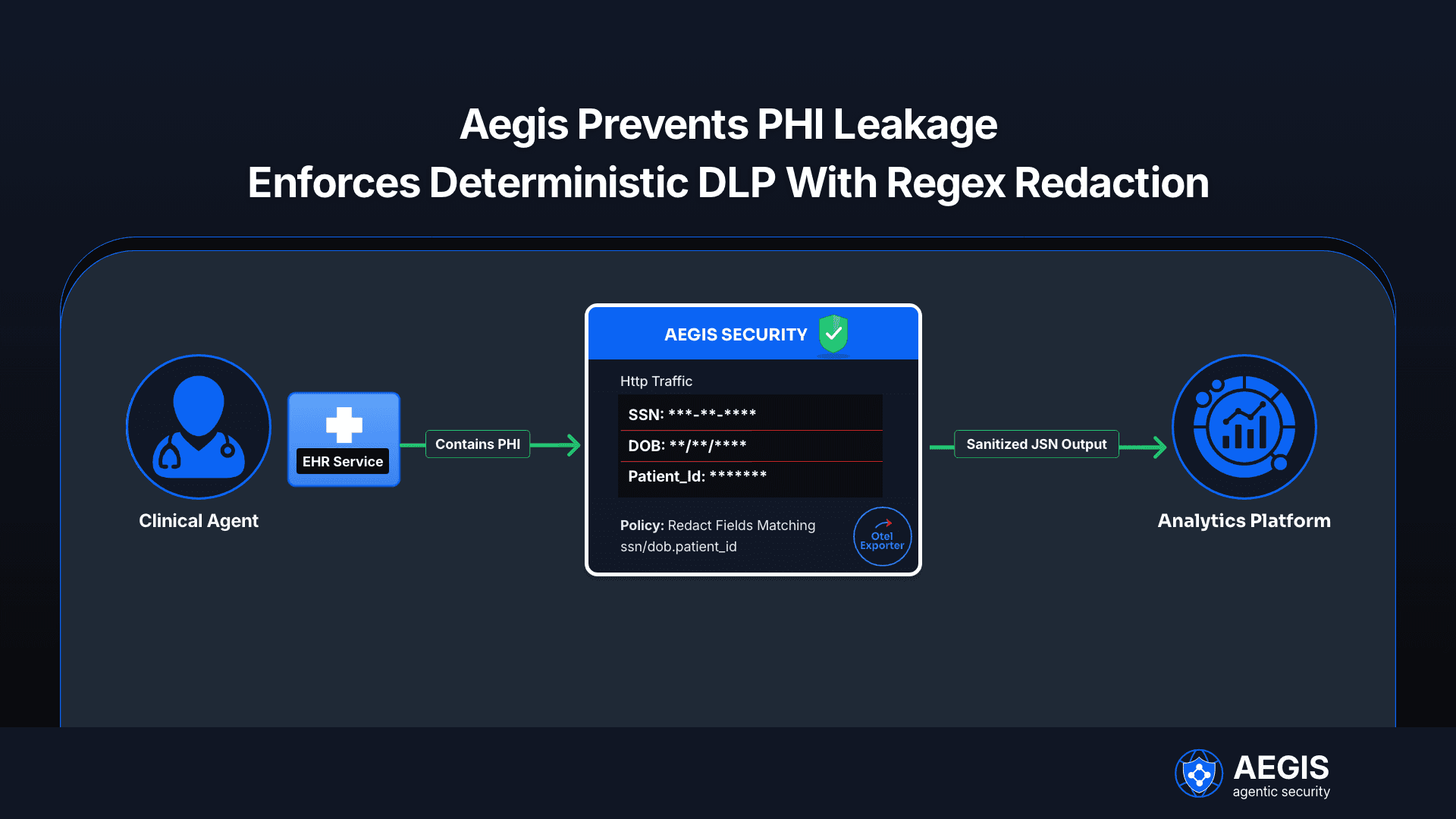
- DLP & residency rules: redact precise coordinates or block off-region API calls.
- Per-agent budgets & rate limits: prevent runaway satellite or LLM calls.
- Shadow mode & metrics: collect would-block events for tuning before enforcement.
- Human approval flow: for high-risk actions require an approval token delivered through Slack/Teams.
Auditable telemetry: each decision includes agent_id, policy_version, decision_reason and is streamed as OpenTelemetry spans for SOC and compliance teams.
Technical enforcement pattern
Implementation details (practical, step-by-step)
1) Register agents and scope identity
Assign each agent a unique identity and short-lived JWT with tenant and scope claims. Map policies to agent IDs, not to code-level heuristics.
2) Write policy-as-code
Policies are YAML → compiled to optimized OPA bundles. Use numeric constraints and allowlists for endpoints.
Example policy snippet:
agent: irrigation-agent
allowed_tools:
- name: field-valve-api
actions:
- set_flow
conditions:
max_flow_lpm: 100
allowed_hours: "06:00-08:00"
require_approval_if_cost_gt: 50
dlp:
redact_fields: ["geo.precise_lat","geo.precise_lon"]
budgets:
daily_usd: 100
rates:
rps: 5
3) Deploy gateway as proxy/sidecar
Run the Aegis gateway (ext_authz pattern) as a sidecar or forward proxy to inspect outbound calls. For non-HTTP tools, use lightweight middleware.
4) Shadow, tune, flip
Start with shadow mode to collect would-block metrics (blocked actuator commands, would-block events, budget overrun attempts). Tune rules and then enable enforcement.
5) Observability & compliance
Export OTel spans and structured logs to Grafana/Prometheus and SIEMs. Maintain policy version history, sign audit logs, and provide human-readable decision reasons for regulators.
Aegis in action — three focused examples (operational)
Flood-monitoring and pump control
Two upstream sensor agents (river level + rainfall model) must agree before pumping. Policy: only when both agents’ flags are true, and only within allowed hours; costly backup pumps require human approval if runtime cost > threshold. Aegis enforces the consensus rule, validates pump duration and flow, and logs the decision with policy_version and approval_id.
Carbon tracking and third-party billing APIs
A carbon-aggregation agent queries multiple billing APIs. Aegis applies per-agent daily budgets and per-API rate limits, throttling or blocking calls that risk runaway fees. Finance teams get budget alerts and traces for audits.
Irrigation safety example (exemplar)
An irrigation agent receives noisy moisture input and attempts to flood fields. Aegis blocks any watering command outside 06:00–08:00, sanitizes geo fields to coarse location, logs the blocked event, and (if in shadow) reports would-block counts to the operations dashboard.
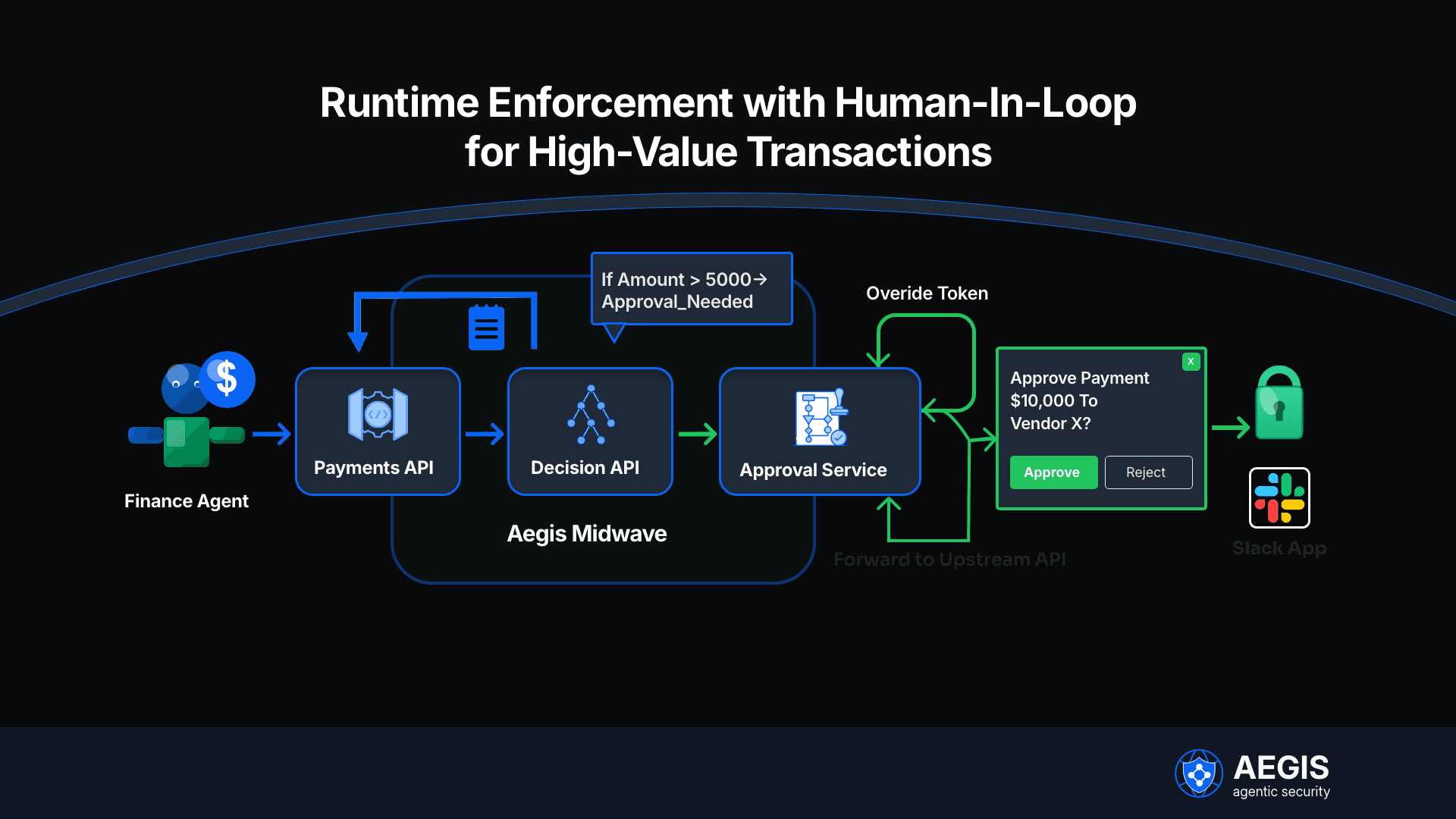
Table 1 — Common runtime policy rules for environmental actuators
Rule type | Example condition | Enforcement action |
Numeric bounds | max_flow_lpm: 100 | allow / deny |
Time windows | allowed_hours: "06:00-08:00" | deny outside window |
Endpoint allowlist | allowed_domains: ["internal-sensors.myorg"] | deny egress |
Cost threshold | require_approval_if_cost_gt: 50 USD | pause → approval_needed |
DLP | redact_fields: ["geo.precise_*"] | sanitize before send |
Table 2 — Metrics to track during rollout
Metric | Why it matters | Target (example) |
Would-block events (shadow) | Shows false positives before enforcement | < 5% of calls |
Blocked actuator commands | Safety intercepts | Reduction after tuning |
Per-agent daily spend | FinOps control | Stay within budget |
Decision latency (P99) | Agent UX impact | ≤ 20 ms. (IBM) |
Addressing common objections
“Policy latency will slow agents.” — Use prepared OPA queries, in-memory caches, and WASM compilation to keep P99 decision latency ≤20 ms; instrument and set SLA budgets for policy calls. (IBM)
“Policies are too brittle.” — Start in shadow mode, iterate using telemetry, and keep granular versioned policies with quick rollbacks and a policy cookbook from operations teams.
Where Aegis fits in a security stack
Aegis is not an IDE, nor a replacement for IAM or a full service mesh; it is a runtime enforcement layer purpose-built for agentic workflows. For environmental monitoring and sustainability initiatives Aegis provides these concrete benefits:
- Enforce least-privilege per agent: agents get only the tools and parameters they need. This prevents privilege escalation between agents in orchestrations.
- Validate actuator parameters: numeric and semantic checks avoid dangerous physical effects (over-watering, valve over-pressurization).
- Budget & rate governance: per-agent quotas and spend limits stop runaway third-party API costs.
- DLP & residency: redact geo precision and route calls per tenant region to meet privacy/regulatory needs.
- Auditability: OpenTelemetry spans with policy_version, decision_reason, and approval_id provide SIEM-ready trails for compliance.
- Developer experience: policy-as-code, hot reloads, dry-run tools, and SDKs make integration low-friction for teams already building agents.
Operationally, Aegis acts as the “policy checkpoint” in your agent pipeline. It enables security teams to trust autonomous workflows by converting informal operational rules into testable, auditable policies that run at runtime — the moment where agents interact with the physical or economic world. In practice, teams deploying Aegis report measurable reductions in incorrect actuator triggers and third-party costs after policy rollout (trackable via the metrics above). Independent research also shows that organizations scaling agentic systems are prioritizing governance as a top barrier — making a runtime guardrail like Aegis essential to move from pilot to production. (McKinsey & Company)
FAQ
Q1: How do I test actuator rules safely?
Run policies in shadow mode for a fixed period; collect would-block metrics and sample payloads, then iterate.
Q2: How do approvals scale?
Use thresholds to reduce approvals, route high-risk events to paged escalation, and use override tokens with single retry semantics.
Q3: Can Aegis redact precise geo coordinates?
Yes — deterministic DLP redacts or coarse-grains coordinates before egress.
Q4: What telemetry is produced for audits?
OpenTelemetry spans include agent_id, policy_version, decision, reason, latency and estimated cost; logs are SIEM-ready.
Q5: How do I prevent budget overruns?
Define per-agent budgets and rate limits in policy; Aegis enforces and emits alerts when thresholds approach.
Next steps & CTA
Start with a small policy set: identity scope, numeric bounds for actuators, an egress allowlist, and a daily budget for expensive APIs. Run in shadow mode for 7–14 days, tune thresholds, then enable enforcement.